
Access Control for Commercial Buildings
A delivery driver props open a side door for convenience, an ex-employee still has a working keycard, and a visitor signs in at the front desk but heads somewhere else. That is how small gaps become real security problems. Access control for commercial buildings is not just about locking doors. It is about deciding who gets in, where they can go, when they can enter, and how quickly your team can respond when something looks wrong.
For property managers and business owners in Los Angeles, that decision carries operational weight. A Class A office tower, a mixed-use retail site, a warehouse, and a medical building all need controlled access, but not in the same way. The right system has to match traffic flow, staffing levels, hours of operation, tenant expectations, and the actual risks on site.
What access control for commercial buildings really covers
At its core, access control is the framework that manages entry and movement throughout a property. That includes exterior doors, lobby checkpoints, elevators, loading docks, parking garages, server rooms, restricted suites, and after-hours access points. A good setup does more than deny unauthorized entry. It creates accountability.
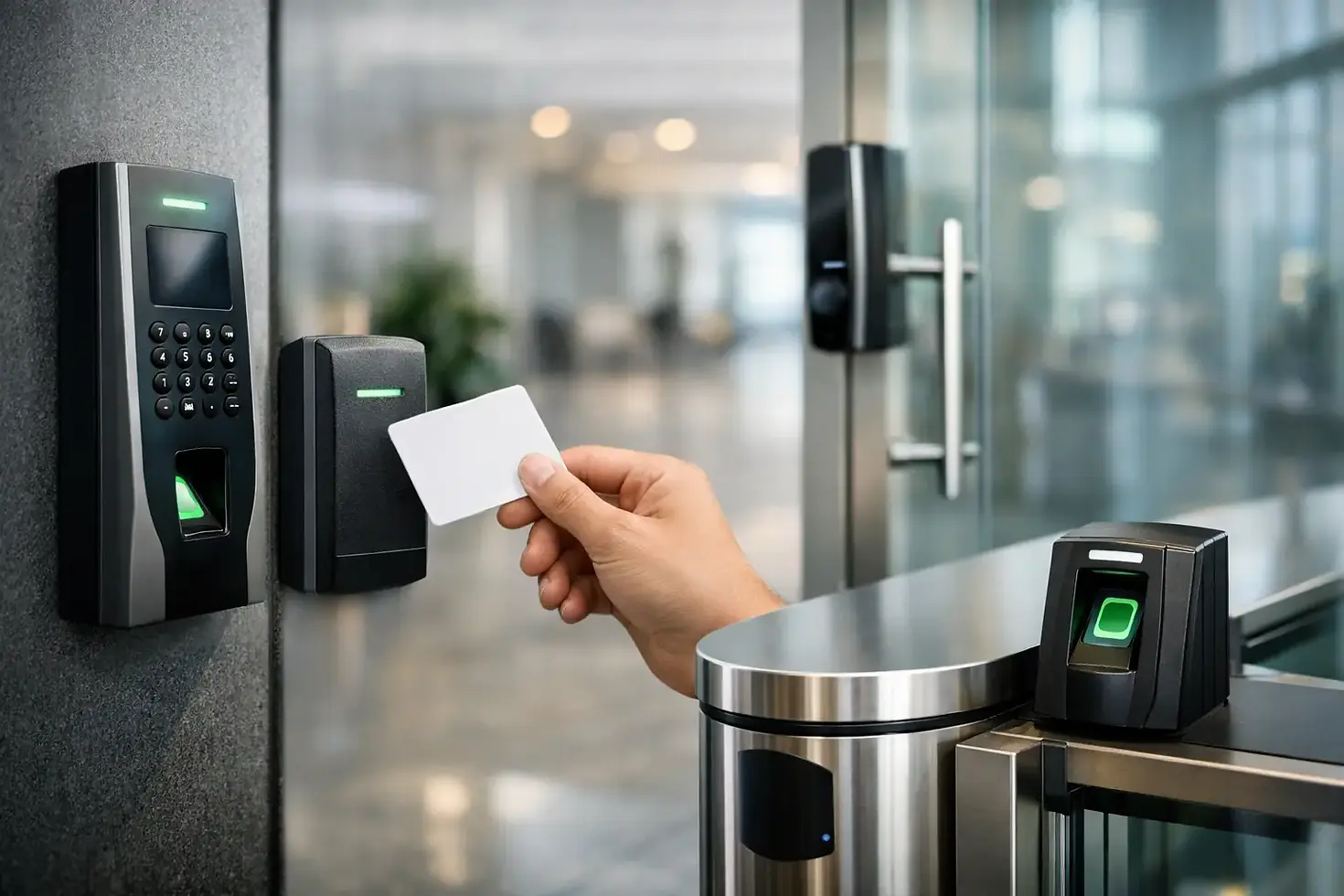
Instead of relying on physical keys alone, modern systems use credentials such as keycards, fobs, mobile access, PIN codes, or biometric verification. Each method has strengths and limitations. A keycard system is easy to issue and deactivate. Mobile credentials reduce the problem of lost badges but may not fit every workforce. Biometrics add control in sensitive areas, though they require more planning around privacy, user acceptance, and system cost.
The bigger point is that access control should support how the building actually runs. If your tenants receive frequent guests, the visitor process matters just as much as employee access. If your property has multiple vendors arriving before business hours, service entrances and loading zones need tighter oversight than the lobby.
Why keys and basic locks fall short
Traditional locks still have a place, but they create blind spots in commercial settings. If a master key goes missing, you may not know who has it, whether it was copied, or which doors are now exposed. Rekeying can be expensive and disruptive, especially in larger buildings.
Electronic access changes that equation. Credentials can be revoked quickly. Entry events can be logged. Schedules can be set by role, tenant, department, or time of day. That gives building operators something they rarely get from mechanical locks alone - visibility.
Visibility matters because many access issues are not dramatic break-ins. They are everyday failures in control. A tenant lets a former contractor in out of habit. A rear entrance is used for smoking breaks and never fully secured. A cleaning crew enters areas outside its assigned scope. These are manageable problems when you can see patterns and enforce rules consistently.
The components that make a system work
Readers sometimes think of access control as a single product, but effective coverage is usually a layered operation. Credentials and readers are only part of it. Door hardware, electronic locks, intercoms, cameras, alarms, and monitoring procedures all need to work together.
That integration is where many buildings either gain real control or waste money on fragmented tools. A door alarm without camera verification leaves too much guesswork. A video system without controlled entry captures incidents but does not prevent them. An app-based access platform can be convenient, but if no one is watching exception reports or responding to alerts, convenience starts to outrun security.
On higher-traffic properties, on-site personnel also play a direct role. Security officers can verify visitors, challenge tailgating, manage deliveries, monitor live feeds, and respond when the system flags suspicious activity. Technology is powerful, but it is strongest when trained people are using it with clear procedures.
Where commercial buildings are most vulnerable
The most exposed access points are often the ones people stop noticing. Parking structures, stairwell doors, loading areas, side entrances, and shared tenant corridors tend to create the most trouble. They are busy enough to be useful and quiet enough to be exploited.
Tailgating is one of the most common examples. Someone without authorization follows an employee through a secured door, and no one challenges it because the interaction looks normal. In office buildings, this happens constantly when convenience takes priority over policy. In retail and industrial properties, the issue may be less about tailgating and more about unsecured vendor access or after-hours entry.
Vacancy also changes the picture. If part of a building is unleased or under renovation, access rules should not remain static. Empty suites, temporary workers, and contractor traffic can expand your exposure fast. Many managers make the mistake of treating access as a set-it-and-forget-it system when it should be reviewed as occupancy and use patterns change.
Choosing the right level of control
Not every commercial property needs the same degree of restriction. Too little control invites risk, but too much friction can frustrate tenants, slow operations, and create workarounds that defeat the system.
A multi-tenant office building may need a controlled lobby, credentialed elevator access after hours, visitor registration, and restricted entry to management offices and utility rooms. A warehouse may prioritize perimeter gates, dock access, inventory zones, and employee time-based permissions. A medical or financial site will usually need tighter audit trails and stronger controls around records, equipment, and critical areas.
This is where a site-specific risk assessment matters. The best approach is not the most expensive system on paper. It is the one that protects the real pressure points of the property while remaining practical for daily use.
Why access control works better with security personnel
Buildings do not stay secure just because hardware is installed. Someone still has to manage exceptions, respond to alerts, assist visitors, and handle the human behavior that systems alone cannot control.
That is why many commercial properties pair access technology with trained guards or mobile patrol. A front desk officer can verify identities, manage visitor credentials, and intervene when someone tries to bypass procedure. Patrol units can inspect vulnerable doors, gates, and service areas after hours. Surveillance monitoring can confirm whether an alarm is a real threat, an employee mistake, or a maintenance issue.
For Los Angeles properties, that layered model often makes the most sense. Building traffic is unpredictable, vendors come and go, and properties can face very different threat profiles block by block. Wings Security Services Inc. uses that combined approach because access control is strongest when personnel, monitoring, and physical infrastructure are aligned.
Common mistakes building operators make
One of the biggest mistakes is focusing on the front entrance while ignoring side and service access. Another is giving broad permissions to too many users because it feels easier administratively. That convenience can create unnecessary exposure.
Poor credential offboarding is another common gap. When employees resign, contractors rotate out, or vendors change, access should be updated immediately. Delays create silent risk. So does failing to review audit logs and alarm activity. If no one checks the data, the system becomes expensive decoration.
There is also the issue of resident or tenant expectations in mixed-use properties. People want security, but they also want smooth entry for staff, clients, and deliveries. The answer is not looser control. It is clearer procedures, better communication, and a setup that reflects how the site operates hour by hour.
What to look for in a commercial access strategy
A strong plan starts with a simple question: what are you trying to control? For some properties, the priority is unauthorized entry. For others, it is internal movement, after-hours activity, or visitor management. The answer shapes everything from door hardware to staffing.
Look for systems and procedures that allow fast credential changes, clear access levels, reliable event logging, camera integration, and after-hours response. Make sure your team can handle lockouts, suspicious access attempts, and emergency overrides without confusion. If the building has multiple tenants or departments, the plan should also define who approves access and how exceptions are documented.
Most important, build for real operations rather than ideal behavior. People forget badges, hold doors open, arrive late, and ask for favors. Vendors show up early. Deliveries stack up. Access control has to hold up under those everyday conditions, not just during polished demos.
The best commercial security decisions usually come down to clarity. Know who belongs on the property, where they should be, and what happens when something does not look right. When access control is built around that standard, your building runs safer, your tenants feel it, and your team spends less time reacting to preventable problems.


Comments