
Apartment Complex Security Solutions That Work
- Jun 25
- 6 min read
A resident props open a side gate for a food delivery, a package disappears from the lobby an hour later, and by midnight the property manager is fielding calls about a stranger seen near parked cars. That is how security issues start in multifamily housing - not always with a major incident, but with small gaps that add up. Effective apartment complex security solutions close those gaps before they become liability, turnover, or a serious threat to resident safety.
For property managers and HOA decision-makers, the challenge is rarely whether security matters. The real question is which measures will actually work for the layout, tenant profile, staffing reality, and crime exposure of the property. A high-rise in Koreatown does not have the same risk picture as a gated community in the Valley or a garden-style complex with multiple pedestrian entry points. Security has to match the site.
What strong apartment complex security solutions actually do
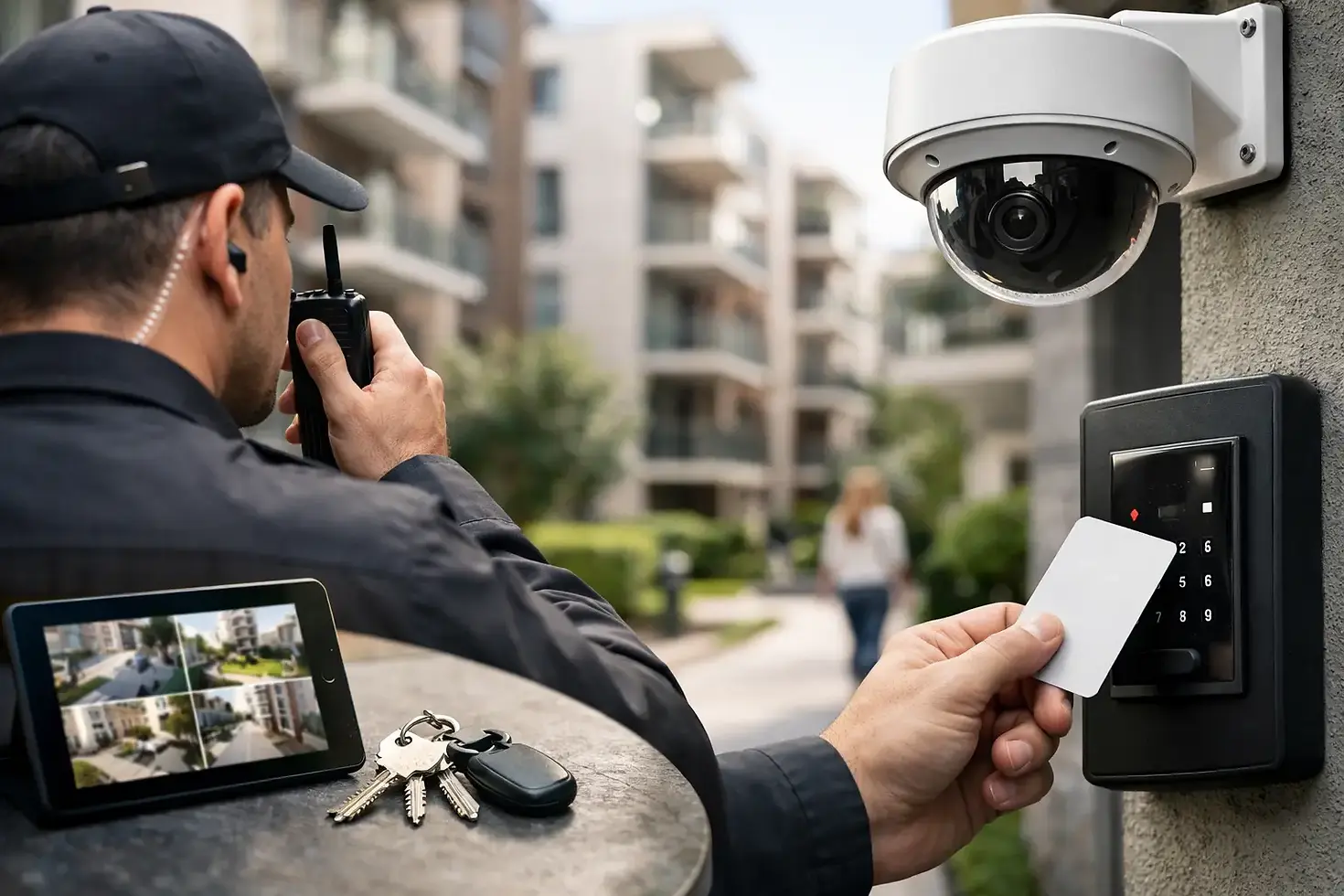
The best apartment complex security solutions are built around deterrence, visibility, control, and response. If a system only records crime after the fact, it is incomplete. If it relies on guard presence without clear procedures or technology support, it is vulnerable. If it installs access control but leaves blind spots in parking areas, it creates a false sense of safety.
Strong coverage starts by answering practical questions. Who can enter the property, and how? Which areas are open to residents, guests, vendors, and staff? Where do incidents happen most often - mailrooms, garages, pools, stairwells, leasing offices, or perimeter fences? How fast can someone intervene when suspicious activity starts?
That is why layered protection tends to outperform one-dimensional fixes. A trained security officer at the front entrance matters. So does camera coverage that supports real-time review, controlled entry systems that log activity, and mobile patrols that keep pressure on weak points after hours. Each element supports the others.
Start with the property’s actual risk profile
Too many apartment communities overspend in low-risk areas and underprotect the places where problems repeat. A proper security plan begins with assessment, not equipment shopping. That means looking at recent incidents, tenant complaints, access patterns, lighting conditions, vendor traffic, vacancy levels, and neighborhood crime trends.
A property with frequent package theft may need lobby supervision, delivery protocols, and camera repositioning more than an additional fence line. A complex dealing with trespassing and vehicle break-ins may benefit more from overnight patrol, garage access control, and visible enforcement presence. If resident disputes are escalating, de-escalation training and documented response procedures become just as important as surveillance.
In Los Angeles, local familiarity matters. A property near nightlife corridors, transit stops, or high-foot-traffic retail zones will face different after-hours pressure than a quieter residential pocket. Security planning works better when it reflects those neighborhood realities instead of relying on a generic checklist.
Access control is where many properties win or lose
Most apartment security problems begin with uncontrolled access. Residents may feel safe because a property has gates, but gates only help if they are consistently used, monitored, and enforced. Broken locks, tailgating, copied fobs, and unsecured pedestrian entrances can neutralize the entire system.
Access control should be practical enough for daily use and strict enough to reduce casual intrusion. That usually means secure entry points, managed credentials, visitor procedures, and clear rules for vendors and deliveries. In larger communities, it may also mean separating resident-only access from leasing traffic, maintenance routes, and amenity access.
There is a trade-off here. The tighter the control, the more friction residents may feel. Overly rigid systems can create complaints, workarounds, and noncompliance. The right balance depends on the property. A luxury mid-rise may prioritize monitored guest entry and concierge-style oversight. A sprawling complex may need broader perimeter control with regular patrol verification because no single desk can watch every entry point.
Why human oversight still matters
Technology helps, but residents and visitors test systems every day. A credential can be shared. A gate can be forced. A camera can capture a face after someone has already entered. Trained on-site personnel add judgment that software alone cannot provide. They can question unusual activity, verify vendor access, spot loitering before it escalates, and respond to issues in real time.
This is where many generic guard deployments fall short. Presence alone is not enough. Officers need post orders, communication protocols, escalation guidance, and clear authority on what to document, report, and stop. In residential environments, professionalism matters as much as visibility because officers are not just protecting property - they are operating in the middle of people’s homes and routines.
Cameras help, but placement and monitoring decide the value
A camera system can be one of the most useful tools on a property or one of the most expensive disappointments. The difference usually comes down to coverage strategy and follow-through. Cameras should protect likely incident zones, not just obvious front-facing areas. That includes garages, elevator lobbies, package rooms, side entrances, mail areas, pool gates, and dumpster corridors where unauthorized entry often goes unnoticed.
Image quality matters, but so does the ability to review footage quickly and use it operationally. If management cannot easily retrieve usable video after an incident, the system is not doing its job. If no one monitors live activity in higher-risk periods, cameras become passive evidence tools rather than active deterrents.
Residents also notice whether surveillance appears intentional or decorative. Well-positioned cameras paired with signage, patrols, and visible enforcement send a stronger message than scattered devices with no clear strategy.
Mobile patrol fills the gaps fixed posts miss
Not every apartment property needs a full-time lobby officer. Many need targeted coverage during the hours and in the zones where incidents are most likely. That is where mobile patrol can be especially effective.
A patrol unit can check gates, inspect parking structures, verify perimeter security, watch for trespassing, and respond to disturbances across a broader footprint than a single stationary post. It also introduces unpredictability, which helps deter theft, vandalism, and unauthorized occupancy. For properties managing budget pressure, patrol can be a smarter fit than round-the-clock fixed staffing.
That said, patrol is not a complete substitute for on-site presence in every scenario. If a building has frequent visitor traffic, chronic disputes, or access issues at a main entrance, a dedicated officer may still be the better move. The right answer depends on whether the main need is broad deterrence, immediate interaction, or both.
Resident experience matters more than many managers expect
Security is not just about reducing crime stats. It affects renewals, online reviews, staff workload, and the overall reputation of a property. When residents repeatedly see broken entry points, loitering near amenities, or slow response to suspicious activity, confidence drops fast. Once that trust erodes, occupancy and retention can follow.
Good security operations create visible order. Residents notice when gates function, common areas are checked, reports are taken seriously, and staff communicate clearly after an incident. They also notice when security personnel are alert, respectful, and consistent. That sense of order has value because it changes how the property is perceived day and night.
For management teams, it also reduces operational drag. Fewer recurring incidents mean fewer complaint cycles, fewer emergency calls, and less time spent reacting to preventable problems.
Building a security plan that can adapt
Apartment communities change. Occupancy levels shift, resident behavior changes, construction starts, staffing turns over, and one incident can expose a vulnerability that was easy to miss on paper. Security planning should not be treated like a one-time purchase. It should be reviewed and adjusted as the property evolves.
That means checking incident patterns regularly, updating post procedures, testing access points, reviewing camera blind spots, and aligning coverage with current conditions. A property that only needed patrol two years ago may now need evening access control support. A building with a staffed front desk may still need stronger garage enforcement if vehicle crime is trending up.
For many Los Angeles properties, the most effective model is layered and responsive: trained officers where interaction matters most, patrol where coverage needs to stay mobile, surveillance where verification and deterrence are critical, and access control where entry management determines the entire security posture. Companies such as Wings Security Services Inc. build around that kind of structure because apartment protection works best when personnel and technology support each other instead of operating separately.
The right security plan should make residents feel protected, managers feel in control, and bad actors feel watched. If a property’s current setup cannot do those three things consistently, it is time to tighten the gaps before the next incident forces the issue.



Comments