
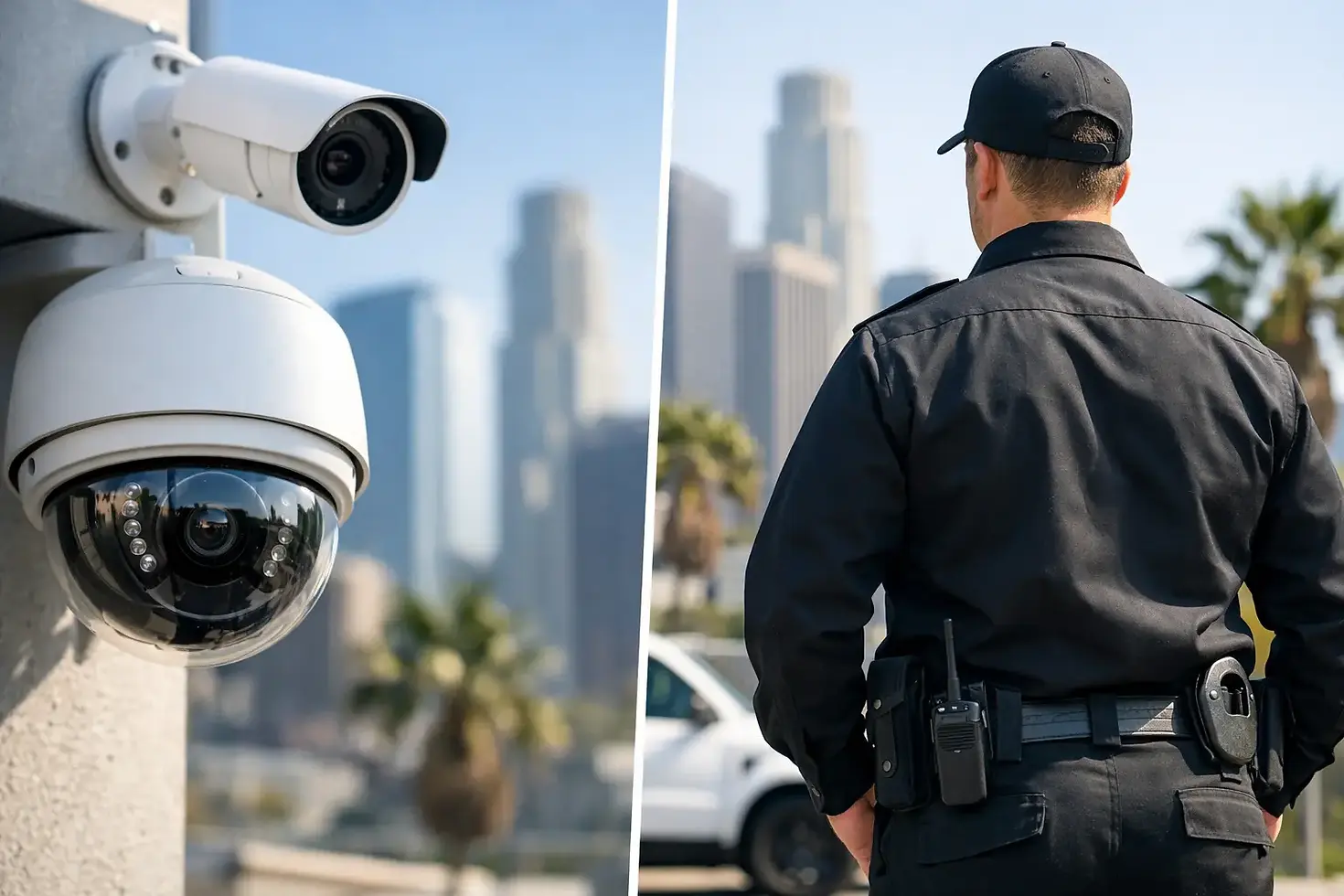
Cameras vs Security Guards for Los Angeles Sites
- Jul 27
- 6 min read
A camera may capture a break-in, but it cannot stop an unauthorized person from entering a loading dock, calm an escalating dispute, or escort a trespasser off the property. That is the practical question behind cameras vs security guards for Los Angeles businesses, residential communities, and events: do you need proof after an incident, active prevention before it grows, or both?
For most sites with meaningful risk exposure, the answer is not a simple either-or decision. Cameras and trained guards solve different problems. A security plan becomes more effective when each is assigned the role it can perform best.
Cameras vs Security Guards: The Core Difference
Cameras extend visibility. Security guards provide judgment, presence, communication, and response. A well-positioned camera system can monitor entrances, parking areas, common spaces, perimeter points, and restricted corridors around the clock. It creates a record of activity and can alert a monitoring team to motion, intrusion, or access-control exceptions.
A guard, however, can assess what the camera sees in context. Is the person at the gate a delivery driver at the wrong entrance, an employee who forgot a badge, or someone testing the property for weaknesses? That distinction matters. The appropriate response could be giving directions, verifying credentials, contacting management, denying entry, calling law enforcement, or activating an emergency procedure.
Cameras are exceptionally useful for coverage. Guards are essential when a situation requires action.
Where Cameras Deliver Strong Value
For large commercial properties, multifamily communities, warehouses, and retail locations, cameras can cover more square footage than a single officer ever could. They are particularly effective in fixed locations where activity should be visible and predictable, such as gate entries, lobby doors, package rooms, elevator banks, vehicle exits, and cash-handling areas.
Recorded video also supports investigations. Clear footage can help establish timelines, identify vehicles, verify whether a door was left unsecured, and document policy violations. For property managers, this can be valuable when resolving resident complaints, reviewing vendor access, or determining where an incident began.
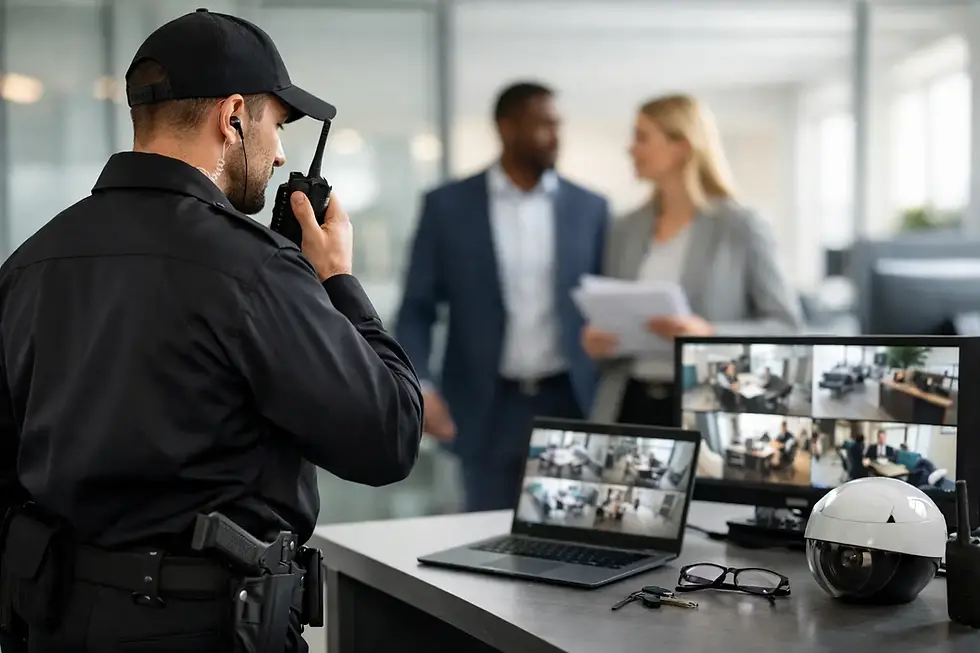
Remote monitoring can increase the value of a camera system. Instead of relying on footage that is reviewed only after a loss, trained personnel can watch live feeds and escalate suspicious activity. This is often a practical option for lower-risk areas that need oversight but do not require a guard standing there every hour of the day.
Still, camera effectiveness depends on design and operations. Poor lighting, blocked views, outdated equipment, unreliable internet, unmonitored alerts, and cameras placed too high or too far from key activity can create false confidence. A system that records a blurred figure after a theft is not the same as a system that helps prevent one.
When a Security Guard Is the Better Choice
A visible, professional guard changes behavior in ways a camera usually cannot. People considering theft, trespass, vandalism, or unauthorized access are more likely to reconsider when they know an alert officer is actively observing the site. That deterrent value is especially important at locations with recurring incidents or predictable vulnerability periods, such as after-hours construction sites, retail centers at closing, vacant properties, and parking structures.
Guards are also the stronger solution when the site requires interaction. Corporate offices may need visitors checked in and credentials verified. Residential communities may need vendor access managed, deliveries documented, and residents assisted after hours. Events need personnel who can screen entry points, direct crowds, identify developing conflicts, and coordinate a measured response without disrupting the guest experience.
A trained officer can conduct patrols that are intentionally unpredictable. They can test exterior doors, notice a damaged fence, identify a vehicle lingering near an entrance, check fire lanes, and report maintenance issues that create safety exposure. Cameras see the spaces they are pointed toward. A guard can change position as conditions change.
Human presence is also critical during emergencies. If there is a medical incident, fire alarm, workplace confrontation, suspicious package, or crowd surge, a guard can help secure the area, communicate with responders, guide occupants, and keep management informed. Video can support that response, but it cannot lead it.
The Trade-Offs Property Owners Should Consider
Guards provide active protection, but staffing must match the assignment. An officer stationed at a front desk cannot simultaneously patrol a parking lot, monitor every camera feed, and manage a loading entrance. Coverage schedules, post orders, relief procedures, supervisor support, and communication protocols all affect results.
Cameras offer broad and consistent observation, but they require maintenance and a clear response plan. If an alert arrives at 2:00 a.m., who receives it? Who decides whether it is a real threat? Who contacts the police, sends a mobile patrol, or meets responding officers? Technology without ownership can leave critical minutes unprotected.
Cost also depends on the situation. A camera installation may involve a larger upfront investment, followed by maintenance, monitoring, storage, and system upgrades. Guard coverage is an ongoing operational expense, yet it may be the more direct answer when theft, trespassing, liability exposure, or customer safety concerns demand immediate intervention.
The right choice depends on the site’s risk profile. A small office with limited after-hours activity may benefit from access control, cameras, and periodic mobile patrol. A busy apartment community with package theft, unauthorized visitors, and resident concerns may need a lobby officer during peak hours alongside camera coverage. A high-attendance event may require a full security team supported by surveillance and controlled entry points.
Why Layered Security Performs Better
The strongest protection model combines cameras, access control, and trained personnel into one operating plan. Cameras provide the guard team with visibility beyond its immediate position. Guards verify alerts, respond to suspicious behavior, and make sure technical issues do not go unnoticed. Access control adds accountability by recording who entered, when they entered, and whether they were authorized.
Consider a parking garage after business hours. A camera detects movement near a restricted stairwell. A monitoring operator or on-site officer reviews the feed, then directs a mobile patrol or nearby guard to investigate. The officer can assess the situation in person, document the contact, and secure the access point if there is a breach. The camera preserves evidence, while the guard creates an immediate protective response.
This approach is also more resilient. If a guard is assisting someone at the front desk, cameras continue watching other areas. If a camera system flags unusual activity, personnel are ready to act. Each layer covers a limitation of the other.
Build the Plan Around Actual Risk
Before choosing cameras, security guards, or both, start with an honest review of the property. Identify where people enter, where they can hide, where assets are stored, and when the site is least protected. Review recent incidents, neighborhood activity, operating hours, staff concerns, and the response time available if something goes wrong.
For Los Angeles properties, local conditions matter. A security plan for a downtown office building will differ from coverage for a gated community in the Valley, a retail location near a major transit corridor, or a film production with changing access needs. The surrounding area, foot traffic, parking layout, tenant mix, and event schedule should shape the staffing and technology strategy.
Post orders should be specific. Guards need to know who may enter, what credentials are accepted, how to handle deliveries, when to contact management, how to report incidents, and when emergency services must be called. Camera coverage should be reviewed against the same plan so critical approaches, exits, and restricted zones are not left in blind spots.
Wings Security Services builds protection plans around these operational details, combining trained personnel with surveillance oversight, access control, and responsive patrol support when the site requires more than passive observation.
Choose Prevention, Not Just Documentation
If your main goal is to investigate incidents after they happen, cameras may meet much of the need. If your goal is to deter misconduct, control access, respond to conflict, and protect people in real time, security guards are the stronger tool. For sites facing active risk, the most dependable answer is usually a coordinated combination of both.
The practical next step is to examine the moments when your property is most exposed. Protection is not measured by how much footage you have after a problem. It is measured by how quickly the right people recognize the threat, respond with discipline, and keep the situation from becoming a loss.


Comments