

How to Secure a Corporate Campus Effectively
- 6 days ago
- 6 min read
A corporate campus can look secure right up until a delivery driver reaches an unmonitored entrance, an ex-employee’s badge still works, or a parking structure becomes a blind spot after dark. Knowing how to secure a corporate campus means planning for those everyday gaps before they become safety incidents, theft losses, or operational disruptions.
For Los Angeles businesses, the answer is not simply adding a guard at the front desk. A campus is a living environment with employees, visitors, vendors, vehicles, executives, sensitive information, and multiple entry points moving at different speeds. Effective protection combines visible personnel, disciplined procedures, access technology, active monitoring, and a response plan that works when conditions change.
Start With a Campus-Specific Risk Assessment
Every campus has a different risk profile. A technology company with proprietary equipment faces different concerns than a medical office complex, media production facility, distribution headquarters, or financial services campus. The surrounding neighborhood, operating hours, public access, employee travel patterns, and building layout all affect the right security posture.
A practical assessment maps the property from the perimeter inward. Review fences, gates, sidewalks, loading docks, lobby entrances, stairwells, elevators, parking areas, rooftops, utility rooms, and emergency exits. Identify where people can enter without being challenged, where cameras cannot see clearly, and where employees may be isolated during early morning or late-night hours.
The assessment should also examine operations, not just physical space. Who has keys or badge access? How are contractors approved? What happens when an employee is terminated? Is there a reliable process for reporting suspicious behavior? A secure campus is built around daily habits as much as locks and cameras.
Control Access Without Slowing Down the Business
Access control is the center of campus security because it determines who can enter, where they can go, and when they should be there. The goal is to make authorized movement easy while making unauthorized movement difficult and visible.
Start by separating the campus into access zones. Public-facing areas such as a reception lobby may require visitor registration and escort procedures. Employee workspaces may require badge access. Server rooms, executive suites, laboratories, inventory areas, and records storage should have tighter permissions and a documented reason for entry.
Badge systems, mobile credentials, key fobs, and electronic locks create accountability that physical keys cannot provide. However, technology only works when access permissions are reviewed consistently. Remove credentials immediately when employment or vendor relationships end, and audit high-level permissions regularly. A former employee with active credentials is not a technology failure. It is a process failure.
Visitor management also deserves attention. Reception teams and security officers should know how to verify appointments, issue temporary credentials, notify hosts, and handle unannounced guests. Delivery personnel need a clear route and handoff point so they do not wander through employee areas looking for a loading dock or signature.
Place Trained Security Officers Where They Create Control
A trained on-site officer does more than watch a doorway. The right officer becomes a visible deterrent, a source of immediate assistance, and a disciplined point of contact when something feels wrong.
At a corporate campus, officer placement should follow risk and activity. A lobby officer can verify visitors and prevent tailgating. A patrol officer can inspect exterior doors, parking lots, and loading areas. During busy periods, officers may support vehicle flow, executive arrivals, vendor access, or employee safety escorts.
Coverage depends on the property. A single-building office may need a professional lobby presence during business hours and mobile patrol after closing. A large multi-building campus may require fixed posts, vehicle patrols, a command center, and 24/7 staffing. More guards are not always the answer. The right number of officers, positioned with clear responsibilities and supervisor oversight, is what creates consistent coverage.
Officers should be trained to observe, document, de-escalate, communicate, and escalate appropriately. They must understand the client’s policies and know the difference between a routine service issue, a policy violation, a medical emergency, and a law enforcement matter. Calm, professional intervention protects people while reducing unnecessary disruption.
Build Surveillance Around Action, Not Just Recording
Cameras are valuable, but a camera that only records an incident after the fact is limited protection. Effective surveillance is designed to support real-time decisions.
Prioritize coverage at entrances, exits, parking garages, receiving areas, pedestrian pathways, perimeter gates, and locations where assets are stored or transferred. Camera views should clearly capture faces, vehicle details, and movement patterns. Poor angles, glare, inadequate lighting, and obstructed views can make expensive equipment ineffective.
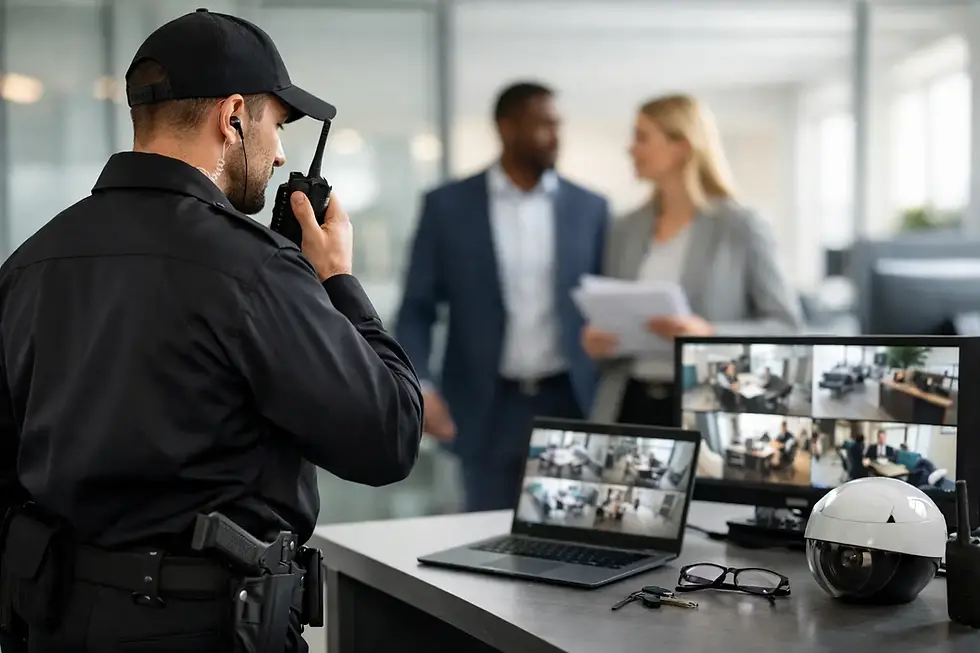
Active monitoring changes the value of surveillance. When trained personnel can observe live footage, verify a concern, communicate with officers, and direct a response, security becomes faster and more coordinated. Video should also be integrated with access control records whenever possible. If a door is forced open or accessed outside expected hours, security should be able to investigate immediately.
Privacy matters as well. Avoid unnecessary camera placement in private areas, communicate monitoring policies clearly, and establish controls for video access and retention. Security measures should protect the workplace without creating avoidable trust concerns.
Treat Parking Areas and Perimeters as Core Security Zones
Many campus security issues begin outside the main building. Parking structures, surface lots, bike storage, rear entrances, and loading docks often have less activity and lower visibility than the lobby. That makes them attractive locations for theft, vandalism, vehicle break-ins, and unwanted entry.
Good exterior security starts with lighting, sightlines, controlled vehicle access, and regular patrols. Landscaping should not conceal doors, cameras, or pathways. Gates and fencing should be maintained, not treated as a one-time installation. A gate that remains open because it is inconvenient to operate is not a security measure.
Employees should have a clear way to request an escort when working late, and security staff should check exterior zones on a documented schedule. Visible patrol activity is especially valuable in larger Los Angeles properties where adjacent traffic, public transit, and multiple neighboring businesses can make it difficult to distinguish normal movement from suspicious behavior.
Prepare for Emergencies Before the Pressure Hits
A corporate campus needs more than a general emergency binder. It needs practical, rehearsed procedures that employees and security personnel can use under pressure.
Plans should address medical emergencies, fire and evacuation, severe weather, workplace violence, suspicious packages, unauthorized persons, utility failures, and civil disturbances. Each plan should identify who makes decisions, who contacts emergency services, how staff communicate, where people assemble, and how the campus is secured afterward.
Communication is often the difference between a contained incident and confusion. Establish a chain of command and reliable methods for reaching security officers, facilities leaders, executives, employees, and emergency responders. Consider what happens if cellular service is limited, a building is inaccessible, or a key manager is off-site.
Tabletop exercises and periodic drills reveal problems that plans on paper miss. An evacuation route may be blocked by construction. A night-shift team may not know the assembly area. A reception desk may lack updated emergency contacts. These are manageable issues when discovered in practice, not during a crisis.
Connect Security to Human Resources and Facilities
Campus protection works best when security is not operating alone. Human resources, facilities, IT, reception, legal, and executive leadership each hold part of the security picture.
Human resources should coordinate with security on employee separations, workplace concerns, restraining orders, and return-to-work situations. Facilities teams should report broken locks, lighting failures, unsecured doors, and construction changes quickly. IT teams can help protect access control systems, camera networks, and sensitive digital records. Reception teams need defined procedures because they often encounter unfamiliar people first.
This coordination should be respectful and need-to-know. Not every employee matter belongs in a broad security briefing, but security must receive enough information to protect people and respond appropriately. Clear communication prevents surprises and keeps the response professional.
Measure What Is Working and Adjust Quickly
Security conditions change. A new tenant, nearby construction project, change in operating hours, executive event, or increase in theft activity may require immediate adjustments. Review incident reports, access logs, patrol findings, alarm activity, and employee feedback to identify recurring issues.
Look for patterns rather than isolated events. Repeated propped doors, recurring garage complaints, false alarms, or unauthorized vendor arrivals are signals that a procedure needs correction. The right security partner will bring these findings forward with specific recommendations, not wait for a major incident to force action.
For corporate decision-makers, the strongest security program is one employees can feel without being burdened by it: controlled entry, alert personnel, well-managed visitors, safer parking areas, and clear help when they need it. Wings Security Services builds that kind of layered coverage around the realities of each site, with trained officers and technology working as one operation.
A campus does not need to feel like a fortress to be protected. It needs people, systems, and procedures that stay alert long after the front door closes.


Comments