
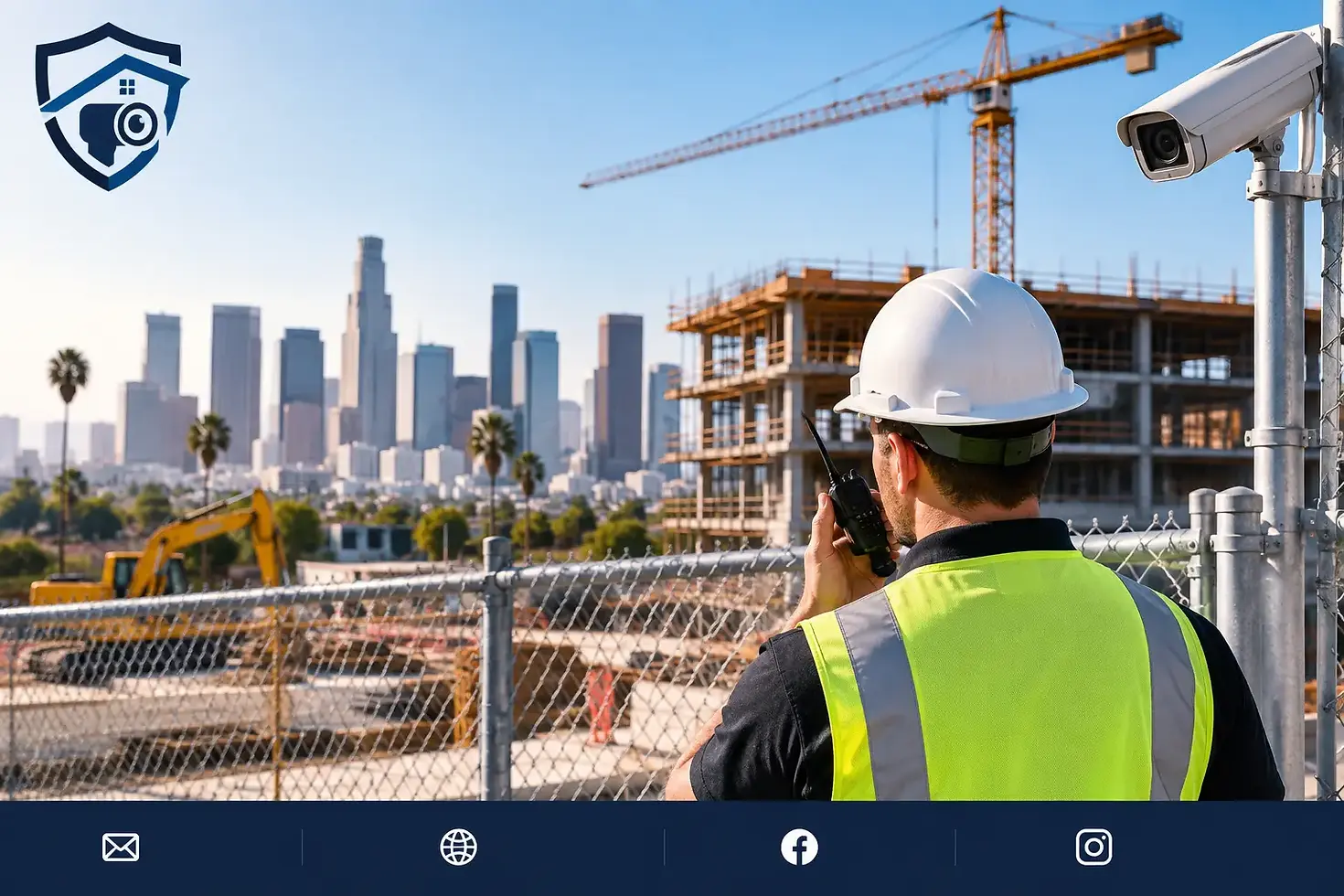
How to Secure Construction Sites in Los Angeles
A construction site can lose far more than tools overnight. One unauthorized entry can mean stolen copper, damaged equipment, graffiti, fire exposure, delayed inspections, workers arriving to an unsafe work area, and a schedule that slips before the day has started. Knowing how to secure construction sites means treating security as an active jobsite operation, not a lock on a gate after the crew leaves.
For Los Angeles contractors, developers, and property managers, the risk profile changes block by block. A site near a busy commercial corridor has different access challenges than a partially enclosed project in an industrial area or a residential renovation with neighbors close by. Effective protection starts with a site-specific plan that combines visible personnel, controlled entry, surveillance, and fast response.
Start With a Construction Site Risk Assessment
Security should begin before valuable materials arrive. Walk the perimeter during daylight and after dark, ideally with the superintendent, project manager, and security provider present. Identify where someone could enter without being seen, where equipment is stored, which areas have poor lighting, and whether fencing actually directs visitors toward a controlled entrance.
The assessment should also consider the project phase. Early-stage sites may have open excavation, temporary fencing, and limited power. Later phases often hold appliances, fixtures, wiring, tools, and finished materials that are easier to remove and resell. As the project changes, the security plan needs to change with it.
Pay close attention to the surrounding environment. Nearby encampments, vacant buildings, nightlife activity, alley access, rail corridors, and poorly lit side streets can affect patrol patterns and post orders. The goal is not to make assumptions about a neighborhood. It is to understand real access routes, activity patterns, and response times.
Control Who Enters and Leaves the Site
Most construction-site losses are easier to prevent when access is disciplined. A gate left open for convenience, an unverified delivery driver, or a subcontractor sharing a code can defeat expensive cameras and fencing.
Create one primary entry point whenever site conditions allow. All workers, vendors, delivery drivers, inspectors, and visitors should use it. A sign-in process, visible identification, and a visitor log establish accountability. On larger projects, badge systems or digital access credentials provide a clearer record of who entered, when they arrived, and when they left.
Vehicle access deserves the same attention. Require drivers to check in before entering, direct deliveries to designated staging areas, and verify the company and purpose of each visit. This is especially valuable when materials are being delivered early in the morning or after regular crew hours.
Access control should not slow down productive work unnecessarily. A small renovation may need a trained guard at the gate during vulnerable evening hours, while a major commercial build may justify staffed access control throughout the day. The right level depends on the volume of people, the value of assets, and the site layout.
Make credentials difficult to misuse
Shared gate codes are convenient, but they quickly become a security gap. Change codes after a subcontractor finishes work, an employee leaves, or an incident occurs. If physical keys are necessary, document who holds them and collect them promptly at the end of each work phase.
A professional security officer can also challenge anyone on site without a visible reason to be there. That human judgment matters. Cameras can record a person entering, but a trained officer can ask questions, verify authorization, redirect a visitor, and escalate a concern before it becomes a loss.
Build a Layered Perimeter
A perimeter is only effective if it is complete, visible, and maintained. Inspect fencing daily for cut sections, loose panels, gaps beneath gates, and materials stacked close enough to create a climbing aid. Temporary fencing should be properly anchored, especially on sites exposed to wind, traffic, or frequent public foot traffic.
Good lighting is one of the strongest deterrents available. Illuminate entry points, equipment storage areas, trailers, blind corners, and the exterior of the fence line. Motion-activated lighting can supplement fixed lighting in low-traffic zones, though critical access points should remain consistently visible.
Secure high-value equipment inside the perimeter rather than simply assuming the fence is enough. Park machinery in a way that limits easy removal, remove keys, use immobilizers where appropriate, and position trailers or equipment to reduce access to vulnerable areas. Store small tools, copper, fuel, and finish materials in locked containers or cages.
Do not overlook fire and life-safety access. Gates, barriers, and stored equipment must not obstruct emergency routes. Security measures should protect the site without creating hazards for workers, first responders, or neighboring properties.
Use Cameras and Monitoring With a Clear Purpose
Surveillance cameras are most effective when they cover a defined risk, not when they are installed randomly. Prioritize gates, perimeter breaches, equipment yards, tool containers, trailers, fuel storage, and areas where materials are staged for pickup or installation.
Camera placement should account for lighting, weather, elevation, and obstruction from changing construction conditions. A camera that had a clear view in week one may be blocked by scaffolding, stacked drywall, or a newly built wall in week six. Review coverage regularly as the project progresses.
Live monitoring adds another layer of value because it can turn a recorded event into a real-time response. If suspicious activity is observed, monitoring personnel can verify the situation, contact on-site security, notify site management, or request law enforcement support when appropriate. This is more effective than discovering a break-in on footage the next morning.
Technology is not a replacement for guards in every situation. Cameras can see, but they cannot conduct a perimeter check, secure a gate left open by a delivery crew, or safely confront unauthorized activity. The strongest approach pairs monitored technology with trained personnel and documented patrol procedures.
Put Trained Guards Where They Have the Most Impact
A visible security officer changes the calculation for someone considering theft, vandalism, or trespassing. Guards also provide immediate practical value: checking credentials, documenting deliveries, conducting patrols, reporting hazards, and preserving a clear chain of information after an incident.
Post orders should be specific. They should identify patrol routes, restricted areas, gate procedures, emergency contacts, authorized personnel, camera locations, escalation protocols, and instructions for reporting damaged fencing or suspicious behavior. Vague instructions such as “watch the site” produce vague results.
Officers should patrol at varied intervals rather than following an easy-to-predict routine. They need reliable communication with dispatch or site leadership, along with a defined procedure for situations involving trespassers, fire alarms, confrontations, or unsafe conditions. Security personnel are there to deter and report, while protecting people and avoiding unnecessary escalation.
For projects with heightened exposure, mobile patrols can extend coverage across multiple locations or provide random checks outside staffed hours. This can be a practical option for smaller sites, though it is not equivalent to a dedicated on-site guard when continuous access control is needed.
Protect Materials, Equipment, and Information
Theft prevention is not just about locking up at night. Keep an inventory of high-value items, record serial numbers, and photograph equipment and major deliveries. Mark tools and machinery clearly. These steps support faster reporting and can make stolen property harder to sell.
Assign responsibility for end-of-day lockup. Before the final crew leaves, confirm that gates are secured, keys are accounted for, equipment is immobilized, containers are locked, ladders are stored, and combustible materials are properly managed. A simple closeout checklist prevents the small oversights that often create the opening for a larger incident.
Protect project information as well. Trailer offices may contain plans, permits, employee information, access codes, and client documents. Lock paper files, secure devices, and limit who can access sensitive records. A stolen set of plans or credentials can create operational and safety issues beyond the immediate property loss.
Establish a Response Plan Before an Incident
Every site needs clear instructions for what happens when an alarm activates, a guard finds a breach, or a manager receives a call about suspicious activity. Identify who receives notifications, who has authority to make decisions, and how security contacts site leadership after hours.
Document incidents immediately with times, photos when safe, descriptions, and actions taken. Fast, accurate reporting helps management identify recurring vulnerabilities and supports insurance, vendor, and law enforcement processes if needed. It also helps distinguish a one-time event from a pattern that requires stronger coverage.
Review incidents without blame. If theft occurs through a gate, the question is not only who left it unsecured. It is whether the process, staffing, lighting, access rules, and end-of-day inspection made that failure too easy.
Construction schedules are demanding enough without beginning each morning with a security problem. A disciplined plan built around controlled access, active patrols, monitored technology, and rapid reporting protects the project’s people, timeline, and investment. For Los Angeles sites that need scalable coverage, Wings Security Services can help turn site-specific risks into a clear, responsive security operation.


Comments