
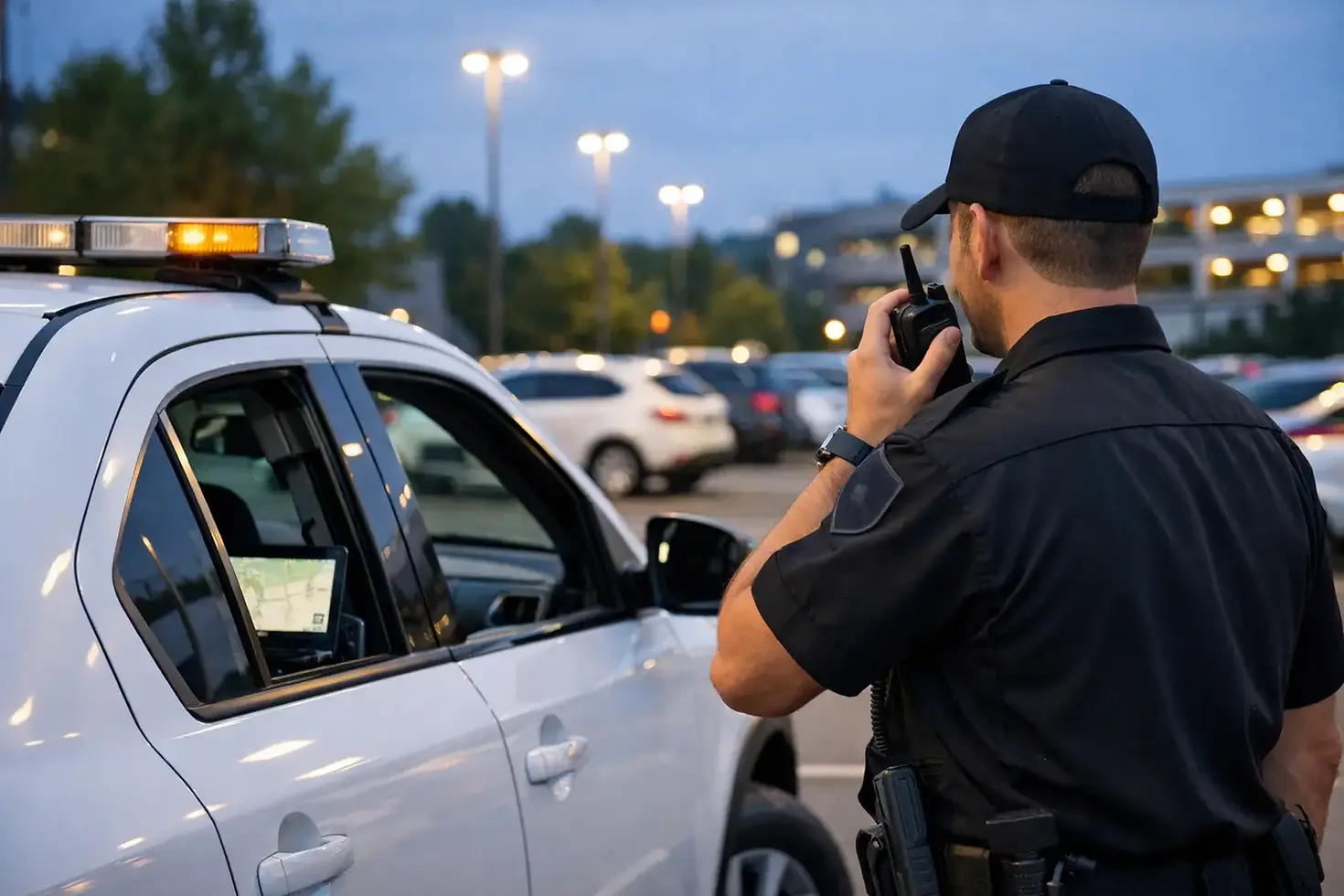
Mobile Patrol Security for Parking Lots
- Jun 24
- 6 min read
A parking lot can become a problem area fast. One broken gate, one dark corner, or one stretch of low visibility after business hours can turn a routine property into an easy target. That is why mobile patrol security for parking lots is often the most practical way to protect vehicles, customers, tenants, and staff without overcommitting to a fixed guard post that may not match the real risk pattern.
For property managers and business owners in Los Angeles, parking lot security is rarely just about theft. It is also about liability, loitering, vandalism, after-hours access, employee safety, and how safe people feel when they arrive or leave. A parking area is often the first and last part of your property that people experience. If it feels uncontrolled, the entire site feels exposed.
Why parking lots need a different security approach
Parking lots are open by design. They have multiple entry points, inconsistent traffic flow, and long periods where activity changes by the hour. An office building may be quiet at night but busy in the early morning. A retail center may need more visibility on weekends. A mixed-use property may deal with daytime deliveries, evening visitors, and overnight trespassing.
That changing pattern matters because static security is not always the best fit. One guard stationed at a single point cannot see every aisle, stairwell, dumpster area, and perimeter edge at once. Cameras help, but cameras alone do not challenge suspicious behavior, check gates, verify lighting issues, or make an active security presence felt across the property.
Mobile patrol fills that gap. Instead of relying on one fixed position, patrol officers move through the site, inspect vulnerable areas, document issues, and create uncertainty for anyone looking for an easy opportunity. Criminal behavior often depends on predictability. A visible patrol vehicle, varied patrol schedule, and trained officer presence make a lot less predictable.
What mobile patrol security for parking lots actually does
At its best, mobile patrol is not just a car driving through every few hours. It is a structured security operation built around deterrence, observation, documentation, and response. Officers patrol by vehicle and, when needed, on foot to inspect areas that cannot be properly checked from a car alone.
In a parking lot environment, that can include checking for unauthorized vehicles, watching for suspicious persons, verifying that lighting is working, inspecting gates and access points, identifying signs of break-ins, spotting hazards that create injury claims, and responding to disturbances before they spread. If a property has recurring problems such as catalytic converter theft, illegal dumping, street-level drug activity, or repeated loitering, patrol patterns can be adjusted to address those exact issues.
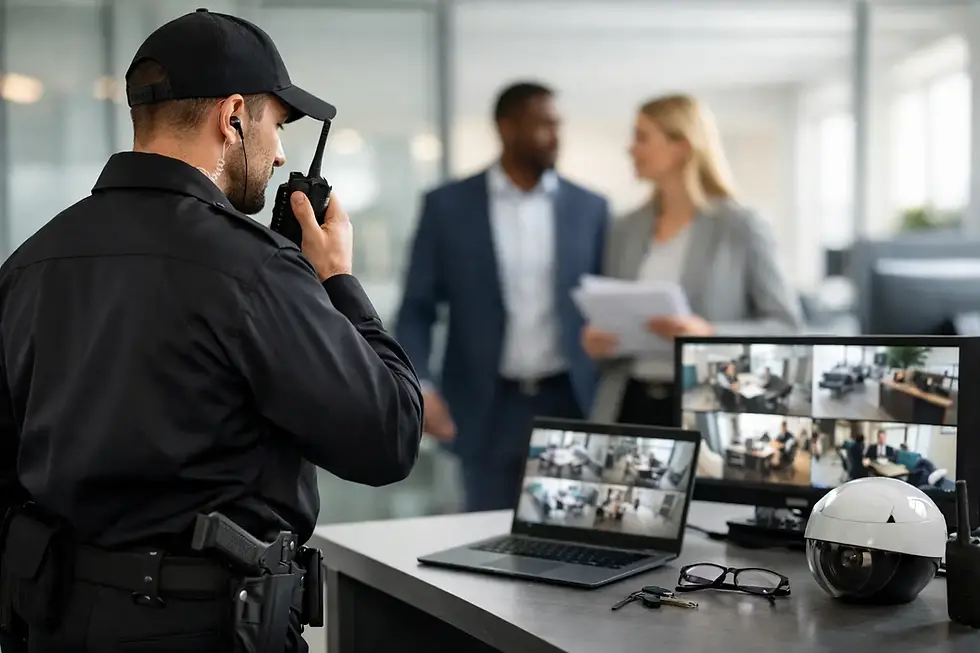
This is where a technology-first security model makes a real difference. When patrol activity is supported by digital reporting, incident documentation, surveillance review, and communication with dispatch, clients get more than a visible presence. They get a record of what was observed, what was addressed, and where the pressure points are developing.
When mobile patrol makes more sense than a standing guard
There are plenty of sites where a dedicated on-site officer is the right call. If a property needs constant access control, high-volume visitor screening, or continuous lobby coverage, a fixed post may be necessary. But many parking lots do not need a guard standing in one place for every hour of operation.
Mobile patrol tends to be a strong fit when the goal is broad area coverage, after-hours deterrence, perimeter checks, and rapid response across a larger footprint. A commercial plaza with several buildings, a residential community with multiple parking zones, or a business park with overnight vacancy often benefits more from active circulation than from static presence alone.
It also gives property managers flexibility. Patrol frequency can increase during known risk windows, after a recent incident, during tenant turnover, or when lighting, fencing, or access systems are temporarily compromised. That matters in Los Angeles, where neighborhood conditions can change quickly and one block can have a very different risk profile from the next.
The biggest risks mobile patrol helps reduce
Parking lots attract opportunistic crime because they offer cover, exits, and valuable targets. Vehicles are left unattended. People are distracted while arriving or leaving. Blind spots are common. Once a site becomes known as an easy place to steal, dump, trespass, or linger, the problem usually grows.
Mobile patrol directly helps reduce vehicle burglary, vandalism, trespassing, unauthorized overnight parking, and loitering. It can also lower the chance of escalation. A patrol officer who notices suspicious behavior early may prevent a break-in, stop a confrontation from growing, or identify a facility issue before it turns into an injury claim.
There is also a customer and tenant confidence factor that should not be underestimated. People notice whether a lot feels monitored. Employees leaving late, residents returning at night, and customers walking to their cars all read the environment quickly. A visible patrol presence tells them the property is being watched and managed.
What to look for in a patrol plan
Not all patrol coverage is equal. A weak patrol plan is predictable, poorly documented, and disconnected from the actual risk pattern on the property. A strong one is built around timing, visibility, communication, and site-specific priorities.
Patrol frequency should match the threat level, not a generic schedule. If incidents cluster between 11 p.m. and 3 a.m., that is where coverage pressure should increase. If certain stairwells, rear access lanes, or perimeter edges repeatedly create problems, they should become regular patrol checkpoints. If the property serves customers, tenants, and vendors with different access needs, the patrol strategy should reflect those movement patterns.
Good reporting is equally important. Property owners should know what was checked, what was found, and what action was taken. Photos, time-stamped activity logs, incident notes, and clear escalation procedures separate professional security from a basic drive-by service.
Mobile patrol security for parking lots in Los Angeles
Los Angeles properties face a security environment that is highly localized. A lot near nightlife venues may deal with late-night disturbances and intoxicated individuals. A retail center may face organized theft activity or vehicle break-ins during busy shopping periods. Residential and mixed-use sites often deal with tailgating through gates, unauthorized parking, and recurring trespassing.
That is why local familiarity matters. Security planning for a parking lot in LA should account for neighborhood traffic patterns, adjacent businesses, lighting conditions, law enforcement response realities, and site use by time of day. A patrol team that understands the area can identify what is normal, what is changing, and what needs immediate attention.
For clients who need layered protection, patrol works best when it is tied to surveillance, access control, and active reporting. Wings Security Services Inc. uses that model because parking lot security is rarely solved by one measure alone. Visible patrol deters. Technology verifies. Reporting drives smarter adjustments.
Common trade-offs to consider
The right security model depends on what you are trying to solve. Mobile patrol is cost-effective compared with assigning a full-time fixed guard, but it is not the same as having an officer stationed at one location every minute. If your property has constant public traffic and frequent face-to-face security interactions, patrol alone may not be enough.
On the other hand, if your challenge is spread-out risk across multiple zones, patrol often provides better coverage for the money. It creates movement, visibility, and unpredictability. In many cases, the best answer is a blended plan - patrol for perimeter and lot coverage, cameras for constant observation, and on-site staffing only where direct control is necessary.
The key is not choosing the biggest security package. It is choosing the right level of coverage for the property as it actually operates.
How to know it is time to add patrol coverage
Most clients do not call for parking lot patrol because of one isolated concern. They call after a pattern starts to form. Maybe employees no longer feel comfortable walking to their cars. Maybe tenants are reporting more suspicious activity. Maybe unauthorized vehicles keep appearing overnight, or the same vandalism issue keeps coming back.
You should also pay attention to near-misses. A broken lock, a gate left open, repeated lighting failures, or someone testing access points are all warnings. Waiting for a major incident usually costs more than addressing the exposure early.
Effective parking lot security is about controlling risk before the problem gets expensive, public, or dangerous. When patrol is planned correctly, it does more than put eyes on the lot. It changes behavior, shortens response time, and helps your property stay one step ahead of the next incident.
A parking lot does not need to feel like the weakest part of your property. With the right patrol strategy, it can become one of the most controlled.


Comments