

Private Security Services That Protect LA Sites
- Jul 25
- 6 min read
A locked door is not a security plan. Neither is a camera that no one is actively watching after business hours. For Los Angeles property managers, business owners, event organizers, and residents, private security services provide the trained presence, clear procedures, and rapid response needed to protect people, property, and daily operations.
The right coverage does more than react after an incident. It identifies where a site is exposed, controls who enters, creates visible deterrence, and gives clients a reliable point of contact when conditions change. That matters in a city where a commercial building, residential community, construction site, and private event can face entirely different risks within a few blocks.
What Private Security Services Should Deliver
A professional security provider should begin with the realities of the site, not a generic guard schedule. A downtown office may need lobby access control, visitor verification, and after-hours patrols. A multifamily property may need a visible patrol presence around parking areas, gates, and common spaces. An event may require guest screening, perimeter control, crowd management, and a coordinated emergency plan.
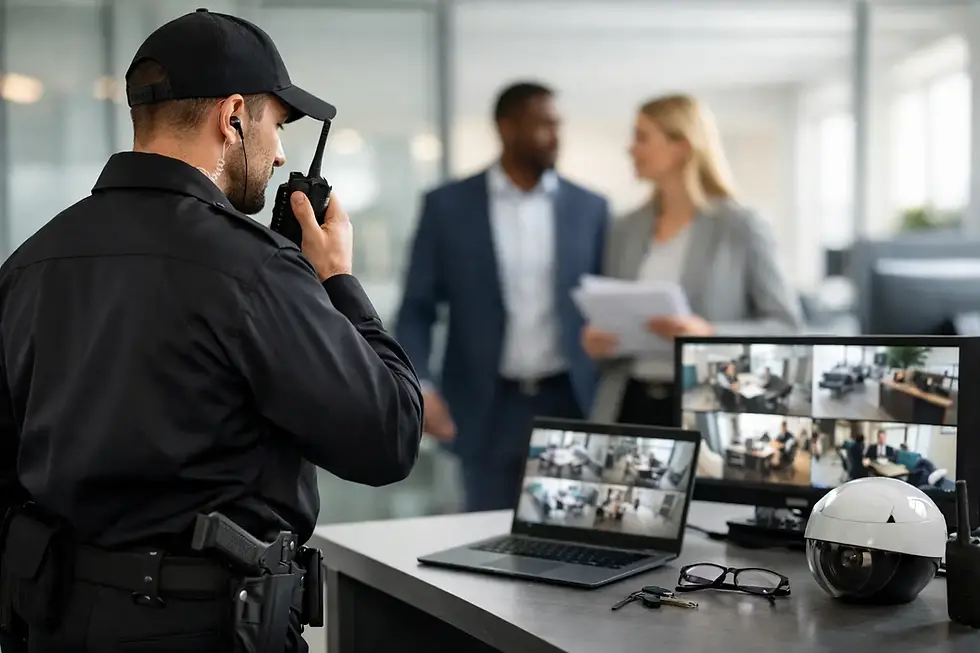
The goal is layered protection. Trained personnel provide judgment, communication, and immediate intervention. Surveillance cameras, digital reporting, access-control systems, and monitoring tools extend visibility beyond a single post. Together, these measures help close the gaps that appear when a site relies on only one method of protection.
Effective private security services should also produce accountability. Clients need to know who was on site, what was observed, whether a door was found unsecured, how an incident was handled, and what action should follow. Clear reports turn security from a vague expense into an operational function that can be managed and improved.
Start With the Risk, Not the Guard Count
Asking, “How many guards do we need?” is understandable, but it is usually the second question. The first is: “What are we protecting, when is it vulnerable, and what happens if security fails?”
A proper risk assessment looks at the property layout, entry points, lighting, surrounding activity, existing technology, operating hours, prior incidents, and the people who use the site. It also considers less obvious pressure points. Deliveries can create access vulnerabilities. Employee terminations can require temporary coverage. A parking structure may be quiet during the day but become the primary concern after dark.
Security needs can also shift quickly. A retail location dealing with repeated theft may need a uniformed deterrent at peak hours. A corporate tenant hosting a high-profile meeting may need executive protection and controlled access for one day. A residential association may need mobile patrols while evaluating longer-term improvements to gates, cameras, or lighting.
The most effective plan is proportionate to the risk. Overstaffing can waste budget without improving outcomes. Understaffing can leave a guard responsible for too much ground, too many entrances, or too many competing tasks. A provider should be able to explain why each assignment, patrol route, and technology recommendation exists.
The Core Components of a Layered Security Plan
Professional guards with defined post orders
A security officer is most effective when expectations are specific. Post orders should define patrol frequency, access procedures, visitor policies, escalation paths, reporting requirements, and emergency responsibilities. They should also address the site’s character. A guard at a luxury residential property must balance a welcoming presence with strict access control. A guard at a construction site needs a different focus: perimeter checks, equipment protection, contractor verification, and after-hours activity.
Training matters, but local familiarity matters too. Los Angeles sites often operate around dense traffic patterns, varied neighborhood conditions, special events, and changing public activity. Officers who understand the environment can spot unusual behavior sooner and communicate more effectively with clients, tenants, vendors, and first responders.
Access control that supports daily operations
Access control is not simply about keeping people out. It is about allowing authorized people to move efficiently while preventing unauthorized entry. Depending on the property, that may include visitor logs, key and credential management, gate procedures, package protocols, vendor check-in, or monitored entry points.
A good process avoids creating unnecessary friction. If a busy office lobby requires every guest to wait while a single officer makes repeated phone calls, security can become a bottleneck. Digital visitor records and clear tenant instructions can improve both protection and professionalism. The right approach depends on traffic volume, the sensitivity of the site, and the level of control required.
Surveillance with active oversight
Cameras are valuable evidence tools, but their preventive value increases when someone can respond to what they show. Surveillance monitoring can identify an unsecured entrance, unauthorized loitering, suspicious vehicle activity, or a developing issue before it becomes more serious.
Technology should support officers rather than replace them. A camera can see a perimeter, but it cannot speak with a visitor, redirect a crowd, investigate a noise complaint, or make a real-time judgment about conditions on the ground. Integrated systems give security teams more awareness and help them direct personnel where they are needed most.
Mobile patrol and rapid response
Not every property requires a full-time fixed guard. Mobile patrol can be an efficient option for sites that need regular visibility, lock and unlock service, exterior checks, alarm response, or scheduled inspections without continuous staffing.
However, patrol is not interchangeable with an on-site officer. If a property has frequent public traffic, repeated incidents, or a high-value access point that must be monitored continuously, a drive-by patrol may not be enough. The coverage model must match the vulnerability, especially during after-hours periods when response time has greater consequences.
Security Planning for Common Los Angeles Needs
Commercial properties need security that protects both business continuity and employee confidence. A visible lobby officer, controlled visitor process, and documented incident response can reduce disruptions while maintaining a professional environment for tenants and guests. For warehouses and industrial sites, patrol routes should emphasize loading areas, vehicle gates, equipment storage, and perimeter integrity.
Event security requires a different level of coordination. The plan should account for the venue layout, expected attendance, entry and exit flow, guest screening, alcohol service, VIP movement, medical access, and emergency evacuation. Staffing should be scaled to the event’s risk profile, not only its guest count. A small private gathering with high-profile attendees may need more controlled protection than a larger low-risk community event.
Residential security is built on consistency. Residents and visitors should understand how access works, while officers must know which issues require immediate escalation. This can include gate failures, package theft, unauthorized parking, noise disputes, suspicious activity, or emergencies involving residents. A strong residential program protects the community without making it feel like a checkpoint.
For personal protection, discretion and planning are critical. Executive protection may involve advance assessments, secure transportation coordination, route awareness, venue checks, and close protection. The appropriate level of visibility depends on the client’s profile, schedule, and threat exposure. In some cases, an overt protective presence is the deterrent. In others, low-profile coverage is the safer choice.
What to Ask Before Hiring a Security Provider
The provider’s answer to a few practical questions will reveal far more than a brochure. Ask how they assess your site before recommending coverage. Ask who supervises officers, how incidents are reported, what technology is available, and how quickly additional personnel can be deployed when conditions change.
You should also ask about communication. Will the provider give you a direct operational contact? How are shift issues, missed patrols, maintenance concerns, and emergency incidents documented? Security is a live service. If a client cannot get a clear answer after a problem occurs, the plan is not providing the control it should.
Finally, look for customization rather than promises that every site receives the same solution. Wings Security Services Inc. builds coverage around the actual operating needs of Los Angeles clients, combining trained personnel with monitoring, access control, patrol, and responsive management where each layer adds value.
Security Is a Daily Operating Decision
The best security program is not the one that looks most impressive on paper. It is the one that makes a site harder to exploit, gives people confidence in the procedures around them, and responds decisively when something is wrong.
If your current plan depends on luck, an unattended camera feed, or a guard assigned without clear direction, the gap is already there. A focused assessment can turn that uncertainty into a practical protection plan built for the way your property, people, and operations actually function.


Comments