
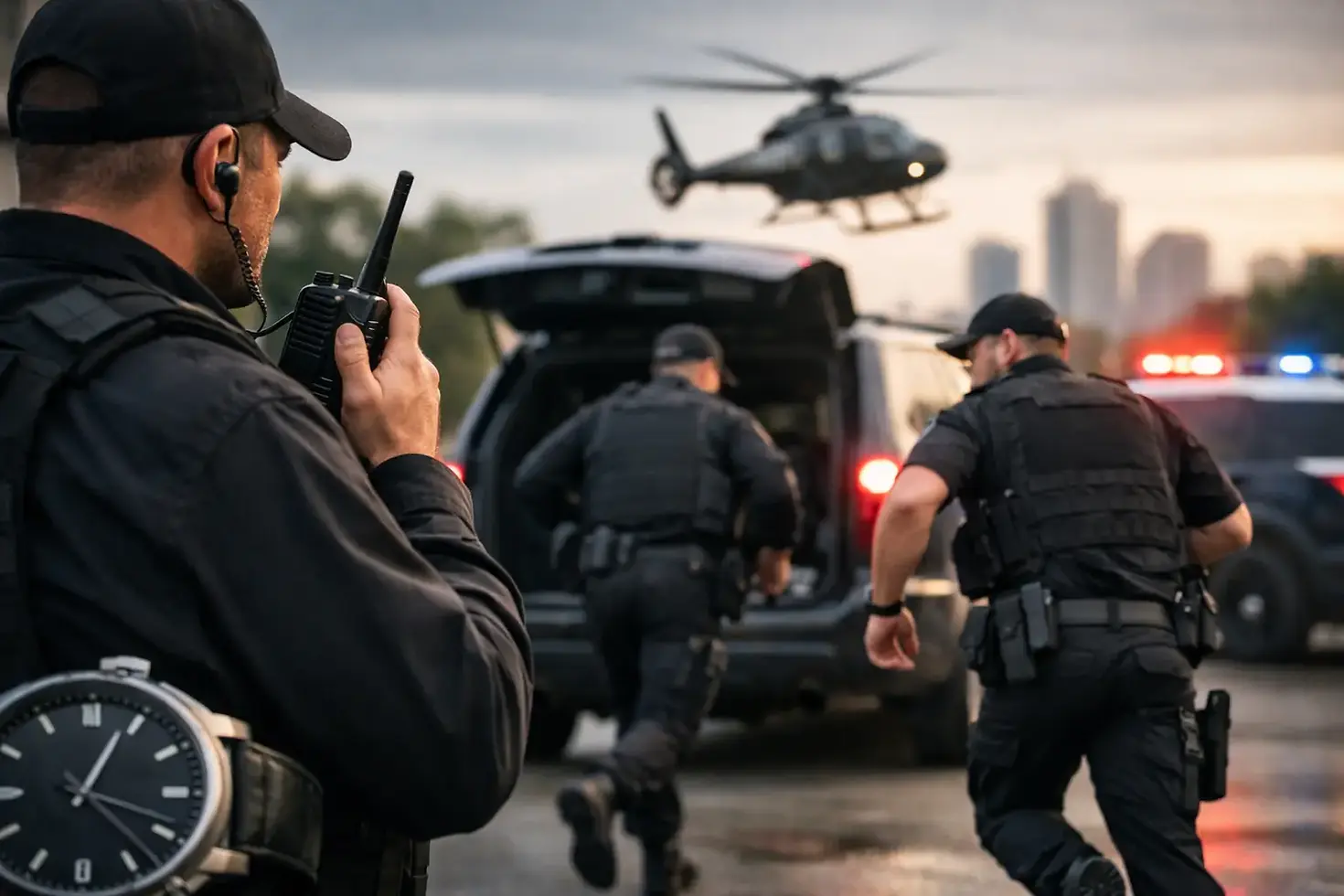
Urgent Security Deployment When Every Hour Counts
- Aug 4
- 5 min read
A vacant overnight shift, a break-in at a construction site, an escalating tenant dispute, or a last-minute event change can expose a property within minutes. Urgent security deployment is not simply about finding an available guard. It requires a disciplined response that puts the right personnel, instructions, technology, and communication structure in place before a manageable concern becomes a costly incident.
For Los Angeles businesses, property managers, event organizers, and private clients, speed matters. So does control. A rushed deployment without a clear plan can leave officers underinformed, access points unprotected, and decision-makers without reliable updates. The goal is immediate protection that remains organized from the first shift forward.
What Urgent Security Deployment Actually Requires
The first question is not, “How fast can someone arrive?” It is, “What must be protected right now?” The answer determines whether a site needs a visible standing guard, mobile patrol coverage, controlled entry, surveillance monitoring, executive protection, or a combination of services.
A retail location dealing with repeat theft may need a uniformed officer at the entrance and clear observation of high-risk areas. A multifamily property after a gate failure may require access control at vehicle and pedestrian entry points. An office facing a termination-related concern may need discreet lobby coverage, visitor screening, and coordination with management. These situations all demand fast action, but they do not call for the same security posture.
An effective deployment begins with a rapid risk briefing. The security provider should establish the exact location, operating hours, current threat, people on site, known access points, existing cameras, site rules, and the client contact authorized to make decisions. Small details matter. A guard who does not know which loading dock stays open after 6 p.m. or which tenant has after-hours access can create delays or conflict at the very moment order is needed.
The First Hours Set the Standard
When security is requested on short notice, the first shift should establish visible control and gather the information needed to improve subsequent coverage. Officers need concise post orders that explain their assignment, reporting chain, emergency procedures, patrol expectations, access rules, and documentation requirements.
Visibility is often the immediate deterrent. A professional officer positioned at a damaged gate, lobby entrance, parking structure, or event check-in point signals that the site is actively managed. But visibility alone is not enough. Officers must know when to observe, when to intervene verbally, when to contact a supervisor, and when to involve law enforcement or emergency services.
Clear communication protects the client as much as the site. Management should receive timely, factual reporting on incidents, denied access attempts, patrol findings, equipment issues, and changes in risk. During an urgent assignment, speculation causes confusion. Accurate logs, time-stamped observations, and escalation procedures give clients a reliable picture of what is happening after hours or across multiple locations.
Fast Staffing Must Still Be the Right Staffing
Rapid coverage is valuable only when officers are prepared for the assignment. A high-traffic event requires a different presence than an empty industrial yard. A residential community may need customer-service awareness alongside firm access control. A private client may require discretion, route awareness, and a close-protection mindset.
This is where generic staffing creates risk. Sending the nearest available person without considering the post can lead to poor judgment, weak communication, or an officer who is uncomfortable with the environment. The best short-notice response matches personnel to the assignment's demands, including the level of public interaction, required visibility, likely conflict points, and shift duration.
Los Angeles also presents neighborhood-specific realities. Traffic patterns can affect arrival times and patrol routes. A downtown commercial building, a Hollywood venue, a Westside residential property, and a warehouse near the ports each have different access, crowd, and after-hours challenges. Local operational familiarity helps security teams plan around those conditions instead of learning them after an incident.
Technology Extends the Officer's Reach
A guard on site is a critical layer of protection, but one person cannot watch every doorway, elevator, parking area, and perimeter at once. Technology helps close those gaps when it is used with a defined operating plan.
For an urgent deployment, existing cameras can be reviewed to identify blind spots, confirm entry and exit patterns, and monitor areas that cannot be continuously staffed. Temporary or existing access-control procedures can identify who is permitted on site and create a record of visitor movement. Digital incident reporting gives supervisors and clients faster visibility into conditions on the ground.
Technology should support people, not replace judgment. Camera coverage may reveal someone testing a rear entrance, but a trained officer determines whether the behavior is suspicious, verifies the situation safely, and follows the appropriate escalation path. The strongest security plans connect surveillance, access control, patrol activity, and human decision-making into one coordinated response.
When to Increase Coverage Instead of Waiting
Clients sometimes hesitate to request more protection because they expect the issue to resolve on its own. That can be reasonable for a minor, contained concern. It is not the right approach when risk indicators are increasing.
Additional coverage is often warranted after a break-in, vandalism, credible threat, employee conflict, repeated trespassing, equipment theft, a failed access system, or a sudden increase in foot traffic. It may also be necessary when an event's attendance, layout, or schedule changes after the original security plan was built.
The right level of coverage depends on the site. One officer may be sufficient for a small, controlled lobby during business hours. The same property may need multiple positions, mobile patrol, or remote monitoring overnight if access points are exposed. Security should scale with the threat, not with a one-size-fits-all package.
A Practical Response Plan for Clients
If you need immediate coverage, prepare the information a security team needs to act decisively. Provide the site address, the reason for deployment, the requested start time, the number of entrances, current occupants, known concerns, and a primary contact who can approve instructions. If there has already been an incident, preserve relevant details such as the time, location, involved parties, damaged areas, and available video.
Before the officer arrives, identify who can grant access, where they should check in, and which areas are off-limits. If police, fire personnel, property staff, or event leads are already involved, make that clear. A short, accurate briefing prevents fragmented communication and gets the security team focused on the real priority.
After coverage begins, reassess the plan. An emergency post may need to continue for one night, a weekend, several weeks, or become part of a longer-term security program. The decision should be based on documented conditions, not assumptions. If patrols repeatedly identify unlocked doors or attempted entry, the property needs more than a temporary guard. It may need changes to access procedures, lighting, cameras, fencing, or staffing hours.
Protection That Holds Up After the Emergency
A fast deployment should solve the immediate problem without creating a new operational burden for the client. That means trained officers, accountable supervision, clear reports, and a plan that can adjust as conditions change. Wings Security Services approaches urgent assignments with that standard: rapid action supported by site-specific planning and technology-driven oversight.
When a property, event, or person becomes vulnerable, waiting for the perfect moment is rarely an option. Put disciplined protection in place early, keep communication clear, and let the response evolve with the facts on the ground.



Comments