
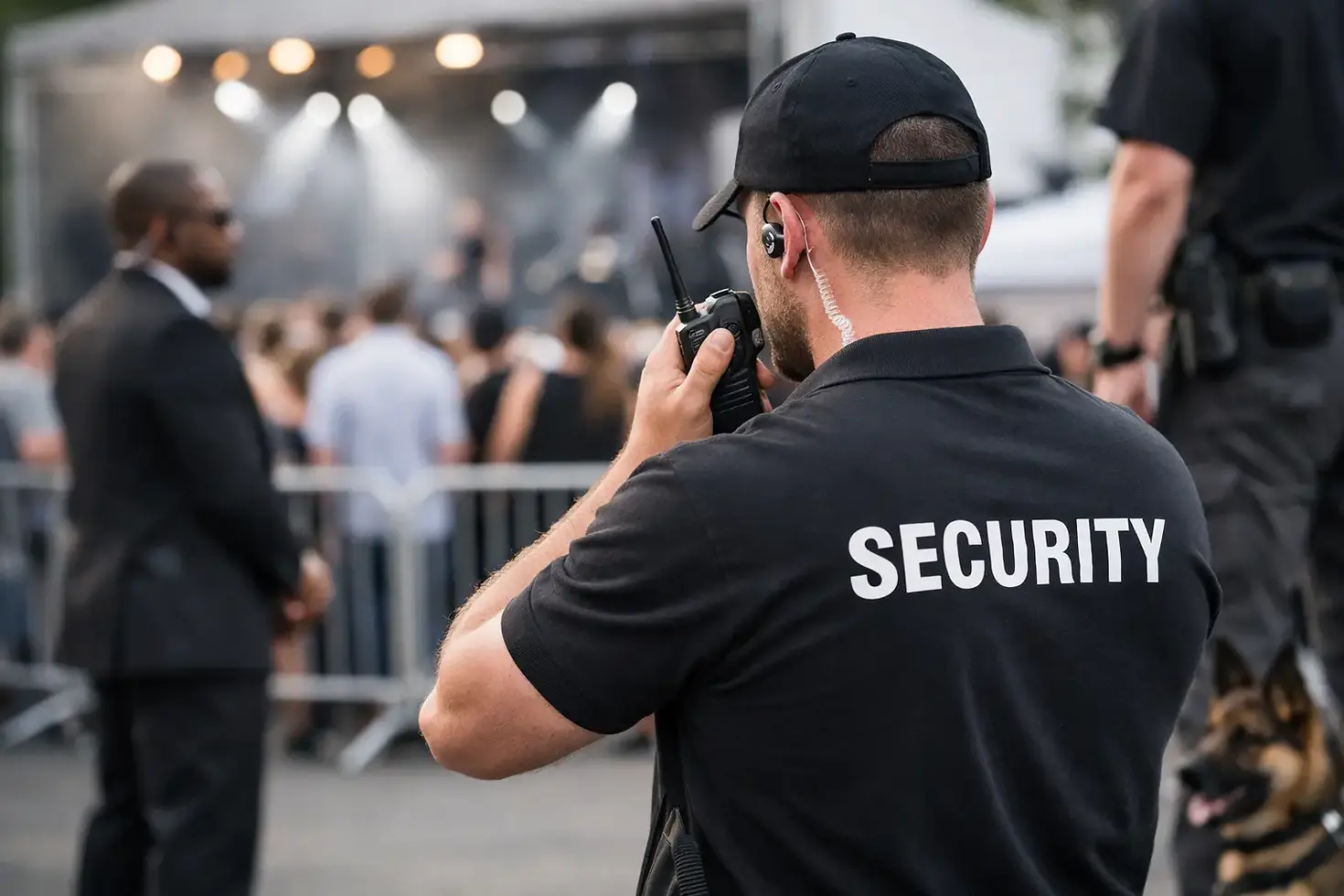
7 Best Event Security Strategies That Work
A packed guest list, alcohol service, multiple entry points, and a hard start time can turn a normal event into a high-pressure security operation within minutes. The best event security strategies are not about adding more guards and hoping for the best. They are about controlling risk before doors open, managing movement while the event is live, and responding fast when conditions change.
For event organizers in Los Angeles, that standard matters. A private party in the Hollywood Hills, a brand launch downtown, a corporate gathering in Century City, or a community event in the Valley all carry different security demands. The plan has to match the venue, the crowd, the timing, and the neighborhood. Anything less leaves gaps.
Best event security strategies start with a real risk assessment
The strongest event security plan begins long before staffing is assigned. A risk assessment should identify what can go wrong, how likely it is, and what impact it would have if it happened. That sounds simple, but many event teams skip the detail and move straight to scheduling guards.
That shortcut usually creates blind spots. A guest-only fundraiser has different exposure than a ticketed music event. A venue with one controlled entrance behaves very differently from an open property with side gates, loading access, and shared parking. Even the event schedule matters. Arrival windows, speaker transitions, alcohol service, cash handling, and breakdown periods each create their own vulnerabilities.
A serious assessment looks at crowd profile, expected attendance, VIP presence, parking flow, neighborhood conditions, nearby protest activity, exit routes, lighting, surveillance coverage, and emergency access. It also accounts for less obvious issues such as vendors entering through back-of-house areas or staff propping open side doors to move equipment faster. Those are the details that often lead to preventable incidents.
Control access before crowd management becomes a problem
Most event security failures begin at the perimeter. If access control is weak, every issue inside becomes harder to contain. Unverified guests slip in, intoxicated individuals re-enter, restricted zones lose integrity, and staff spend the rest of the event reacting instead of managing.
Effective access control is not just about putting a guard at the front door. It means defining who is allowed in, where they are allowed to go, and how that decision is verified. Guest lists, credentials, wristbands, bag checks, invitation scanning, and ID verification should all work together. For higher-profile events, separate lanes for VIPs, vendors, and general attendees reduce congestion and lower the chance of conflict at the entrance.
There is a trade-off here. Tight screening improves control, but if it is too slow, lines build, tempers rise, and the crowd becomes harder to manage outside the venue. The answer is not to loosen standards. It is to staff entrances correctly, use clear signage, and coordinate arrival timing so screening remains firm without creating a bottleneck.
Access zones should be clear and enforced
Every event has spaces that should not be open to everyone. Green rooms, production areas, liquor storage, loading docks, control rooms, and private suites need more than informal oversight. They need visible boundaries and assigned responsibility.
When restricted areas are left to chance, unauthorized access usually looks small at first. Someone follows a vendor through a side entrance. A guest wanders backstage. A former employee shows up and claims they are helping with setup. These moments are easy to dismiss until they escalate. Controlled zones keep minor breaches from turning into operational disruptions.
Put the right personnel in the right positions
One of the best event security strategies is also one of the most misunderstood. Security staffing is not a headcount exercise. It is a placement decision.
A skilled team should be deployed based on function, not just visibility. Entrance screening requires personnel who can stay alert, communicate clearly, and enforce policy without escalating tension. Roaming guards need strong situational awareness and the judgment to identify developing issues before they become incidents. Parking areas call for officers who understand patrol patterns, vehicle risk, and how to maintain presence in lower-visibility spaces.
Supervision is equally important. Without a field lead or clearly assigned chain of command, response times slow down and communication gets messy fast. During a live event, conditions shift constantly. A disciplined security structure allows the team to adapt without confusion.
For some events, visible deterrence is the priority. For others, a lower-profile presence may better fit the guest experience. It depends on the setting, the client’s goals, and the risk level. The point is alignment. Security should support the event, not work against it.
Use technology to close the gaps people miss
On-site personnel remain essential, but relying on manpower alone leaves coverage gaps. Technology gives event teams broader visibility and faster verification, especially across larger properties or complex venues.
Cameras can monitor entrances, parking lots, and choke points that are difficult to cover consistently on foot. Integrated access systems can confirm credentials and flag unauthorized movement. Radios, mobile reporting tools, and live monitoring improve coordination when multiple teams are working the same event.
This layered approach matters because not every issue happens in front of a guard. A side gate left open, a gathering forming in a dim parking area, or someone attempting to access a restricted corridor may only become visible when technology is part of the operation. At Wings Security Services Inc., that combination of trained personnel and digital oversight is central to how modern event protection should work.
Technology is not a substitute for trained judgment. Cameras do not de-escalate conflict, and access tools do not make command decisions. But when used properly, they give security teams more time to intervene before a problem spreads.
Build a crowd management plan for movement, not just numbers
A crowd of 300 can be easy to manage in one layout and difficult in another. That is why effective crowd management is about movement patterns more than total attendance.
Entry queues, bar lines, stage sightlines, smoking areas, restrooms, and exits all create pressure points. If those areas are not mapped early, security teams end up chasing congestion after it forms. That reactive model wastes personnel and increases the likelihood of confrontation.
A better approach is to anticipate where people will gather and how they will move between zones. That may mean adjusting barricades, widening walk paths, separating staff traffic from guest traffic, or placing officers at transition points rather than only at fixed posts. It can also mean planning for surge moments such as headliner arrivals, giveaways, speeches, or closing time.
De-escalation should be part of the event plan
Not every security issue requires physical intervention. In many cases, the right voice, posture, and timing can stop a situation from becoming disruptive. That is especially true at corporate events, private functions, and upscale gatherings where professionalism matters as much as control.
De-escalation works best when officers know the event rules, understand the client’s expectations, and have clear authority to act. If staff are unsure who can remove a guest, deny re-entry, or shut down an unauthorized area, hesitation creates risk. Strong planning supports calm enforcement.
Emergency response needs to be specific, not generic
Every event has an emergency plan on paper. Fewer have one that is realistic under pressure.
A usable response plan should cover medical incidents, fights, fire alarms, evacuation, missing persons, suspicious packages, power loss, and disruptive trespassers. If VIPs are involved, the plan should also address secure movement and extraction routes. For events in Los Angeles, traffic conditions and access for emergency vehicles should never be treated as afterthoughts.
The most effective plans assign roles in advance. Who calls emergency services. Who clears access points. Who guides guests. Who communicates with venue management. Who secures cash, equipment, or restricted areas during an evacuation. If those answers are not clear before the event starts, they will not be clear when seconds matter.
Briefings are where planning becomes operational. Security teams, event staff, vendors, and key decision-makers should all understand the response structure. They do not need the same level of detail, but they do need shared expectations.
The best event security strategies continue after the event ends
Security does not stop when the music ends or the final guest leaves. Breakdown periods are often when sites become more vulnerable. Staff are tired, equipment is exposed, cash or valuables may still be on-site, and entry points that were tightly controlled during the event start to loosen.
Post-event coverage should include exit monitoring, parking oversight, vendor load-out supervision, and a final sweep of restricted areas. This is also the right time to document incidents, note access failures, and review whether staffing levels matched the actual conditions.
That after-action review is where good security teams become better. It reveals whether the perimeter held, whether communication worked, and whether the response structure was fast enough. It also gives organizers a stronger foundation for the next event instead of forcing them to start from zero.
Strong event security is not about making a venue feel tense. It is about giving organizers control, giving guests confidence, and reducing the chance that one preventable issue overshadows everything you worked to produce. When the plan is tailored, disciplined, and backed by the right people and systems, the event can run the way it was meant to.


Excellent post with plenty of useful information. I appreciate the focus on preparation, communication, and risk management throughout the article. Effective Event security (Evenementenbeveiliging)is something every organizer should prioritize, and this guide highlights why it matters. It was an enjoyable read with tips that are both practical and relevant.