
Hotel Security Guard Services That Hold Up
- Jul 1
- 6 min read
A guest checks in after midnight. A delivery driver wants access through a side entrance. A private event is wrapping up on the rooftop while the front desk is handling a payment dispute in the lobby. In a hotel, risk rarely arrives as one big obvious problem. It shows up in small gaps, shifting traffic, and moments when staff are stretched thin. That is exactly where hotel security guard services prove their value.
Hotels operate differently from most commercial properties. They are open around the clock, serve the public, protect private spaces, and manage a constant flow of unfamiliar people. Guests expect comfort and privacy, but ownership also has to think about theft, trespassing, disorderly conduct, workplace safety, liability, and emergency response. A guard presence helps on all fronts, but only when the service is built for hotel operations rather than treated like a generic staffing assignment.
Why hotel security guard services require a different approach
A hotel is part hospitality business, part access-controlled property, and part high-traffic public environment. That mix changes everything. An office building can empty out at night. A hotel gets more unpredictable after dark. Weekend occupancy, special events, alcohol service, valet traffic, and visitor access all create moving targets that need active oversight.
This is why hotel security cannot be reduced to standing at a post and watching the lobby. Effective coverage starts with understanding how the property actually functions. The security plan should reflect guest entry points, employee entrances, loading areas, parking structures, elevators, stairwells, event spaces, and any blind spots where incidents are more likely to begin.
There is also a service component that matters in hotels more than almost anywhere else. Guards need command presence without creating tension for guests. They must know when to de-escalate quietly, when to document, when to coordinate with management, and when to act immediately. That balance is learned, not improvised.
What strong hotel security guard services actually do
The best guard teams prevent problems before they become visible to guests. That means reading patterns, enforcing access rules consistently, and staying alert to behavior that does not fit the setting. In practice, hotel security often centers on lobby observation, patrols, visitor management, key area monitoring, and rapid response to incidents involving noise complaints, suspicious persons, unauthorized access, theft, or disturbances.
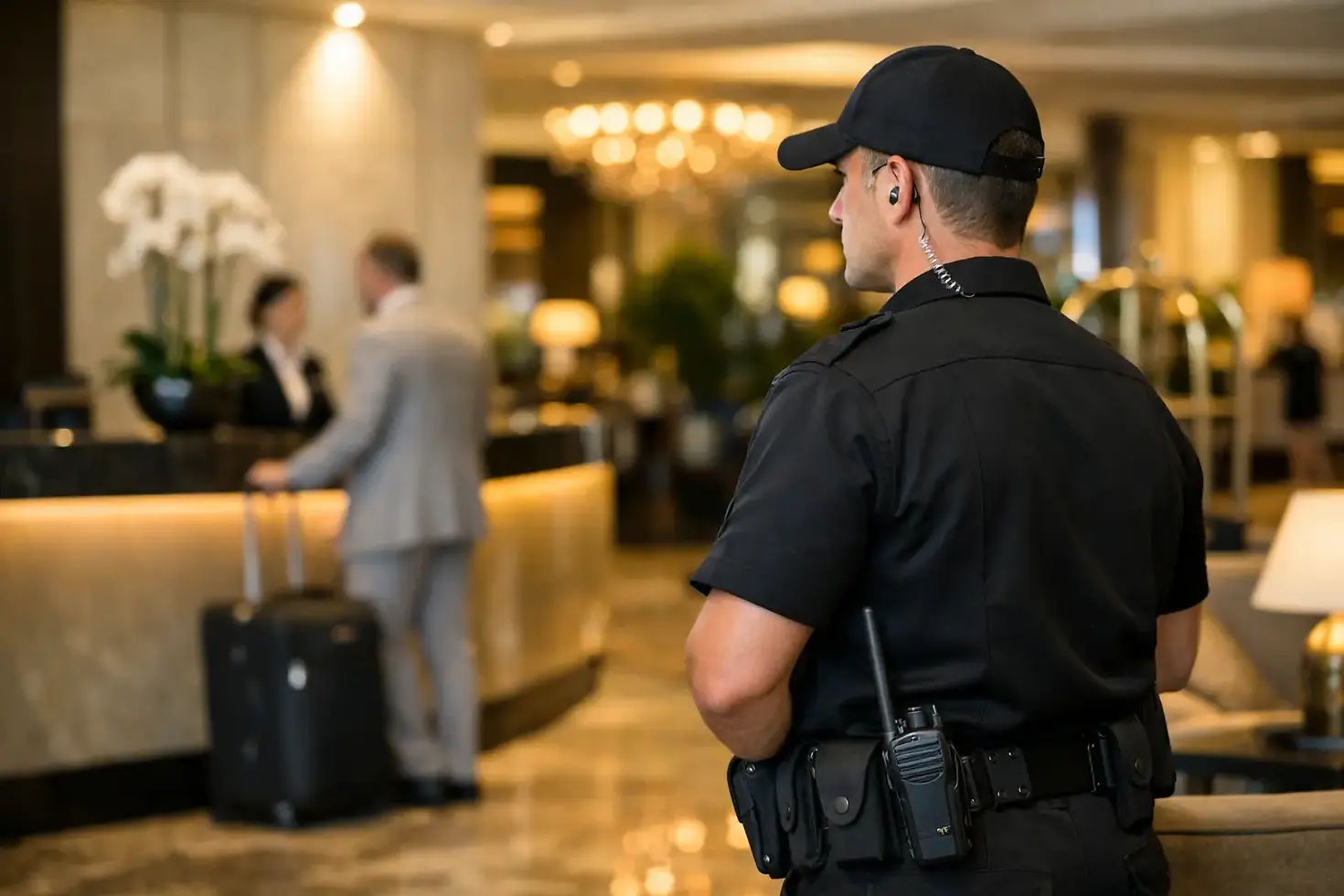
Front-of-house coverage matters because the lobby is the hotel's control point. It is where guests, vendors, rideshare traffic, event attendees, and non-guests can overlap. A trained officer can spot loitering, intervene in confrontations early, and support staff when situations begin to escalate. That visible presence alone can discourage opportunistic crime.
Back-of-house coverage is just as important, even if it gets less attention. Employee-only corridors, loading docks, storage rooms, and service elevators often carry more risk than public areas. Internal theft, unauthorized vendor movement, and unsecured deliveries are common weak points. A serious security plan treats those areas as part of the same operational picture.
Patrol strategy also matters. Static posts have value, but hotels usually need a mix of stationed officers and active patrols. Parking areas, garages, exterior perimeters, and stairwells should not go unobserved for long stretches. If a property has nightlife, banquet operations, or large weekend traffic, patrol frequency may need to increase during specific hours rather than remain uniform all day.
Technology makes hotel guard coverage more effective
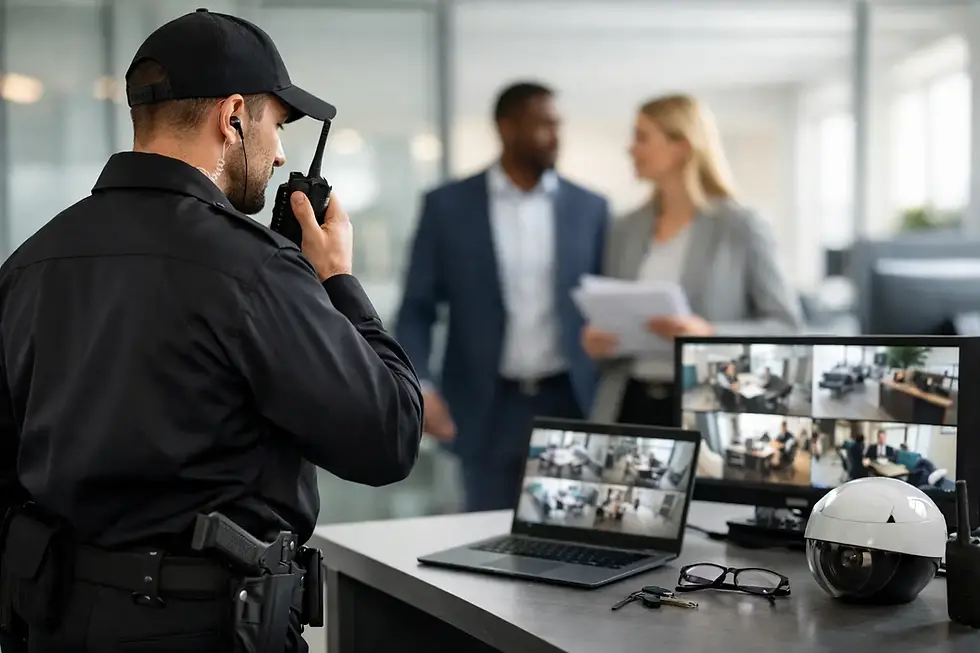
Hotels that rely on guards alone often end up paying for visibility without getting full control. The stronger model combines on-site personnel with cameras, monitored alarms, reporting systems, and access control. This layered approach helps security teams respond faster and document incidents more clearly.
For example, if an officer receives an alert tied to a restricted door, they can verify the issue and move with purpose instead of searching blindly. If management needs a record of recurring problems, digital reporting creates patterns that can be reviewed and corrected. If there is a guest complaint about safety in a parking area, camera coverage paired with patrol logs gives leadership something concrete to assess.
This is one area where a technology-first security company stands apart from a basic guard vendor. The goal is not simply to place a body on site. The goal is to improve awareness, shorten response time, and reduce avoidable exposure. In Los Angeles especially, where property layouts, neighborhood conditions, and traffic patterns can vary block by block, that operational visibility matters.
Common hotel risks and how guards reduce them
Most hotel security concerns fall into a few categories, but the right response depends on the property type. A boutique hotel in a dense urban corridor faces different pressure than an extended-stay property near a freeway or a full-service hotel with conference space.
Unauthorized access is one of the most common problems. Non-guests may enter through side doors, follow guests inside, or move through common areas without challenge. Guards reduce this risk by controlling entry points, monitoring visitor behavior, and supporting staff with clear access procedures.
Theft is another persistent issue. That can involve guest property, employee belongings, deliveries, equipment, or vehicles in parking areas. A visible patrol schedule, camera awareness, and disciplined incident documentation make theft harder to attempt and easier to investigate.
Guest disturbances require a different skill set. Noise complaints, intoxication, domestic disputes, and aggressive behavior can turn serious quickly if mishandled. Security officers in a hotel setting need training in de-escalation, report writing, and coordination with supervisors or law enforcement when needed. Overreaction creates liability. Underreaction creates risk. Good judgment is the difference.
Events add another layer. Weddings, conferences, private parties, and rooftop gatherings often bring in non-registered visitors, alcohol, and fluctuating crowd size. Temporary security plans should account for guest screening, elevator control, restricted access to room floors, and safe guest departure at the end of the event.
Choosing hotel security guard services that fit the property
Not every hotel needs the same level of coverage, and more guards does not automatically mean better protection. The right plan depends on occupancy, operating hours, neighborhood activity, event volume, parking configuration, and the experience level of existing staff.
Some properties need a uniformed officer at the front entrance plus overnight patrols. Others need stronger garage coverage, event security support, or access control at employee entrances. A property with recurring trespassing issues may need visible deterrence first. A hotel dealing with internal loss or repeated after-hours incidents may need a more investigative and reporting-focused approach.
This is where a site assessment becomes essential. A serious provider should evaluate how people move through the property, where incidents tend to occur, and how hotel management wants officers to interact with guests and staff. Security should support operations, not interfere with them.
Local familiarity is another factor that gets overlooked. In Los Angeles, security planning should reflect real neighborhood conditions, not generic assumptions. Response expectations, street activity, nearby venues, and late-night traffic all influence what effective protection looks like. A local team with field experience can usually identify vulnerabilities faster and recommend staffing more accurately.
What hotel managers should expect from a security partner
A hotel security provider should do more than send officers and invoices. Management should expect a clear post order, reliable scheduling, documented activity, and direct communication when incidents happen. If expectations are vague, service quality usually drifts.
Training standards matter. Officers assigned to hotels should understand customer-facing conduct, access control, patrol discipline, emergency response, and proper reporting. Appearance matters too. In a hospitality environment, presentation affects guest confidence, but professionalism has to be backed by real readiness.
Responsiveness is just as important as staffing. Hotels do not always have weeks to prepare for a problem. They may need immediate overnight coverage after an incident, event support on short notice, or a temporary security adjustment during high-occupancy periods. Providers built for fast deployment are better equipped to protect the property when timing matters.
For properties that want stronger oversight, integrated reporting and monitoring can add another level of control. Companies like Wings Security Services Inc. build around that layered model, combining trained officers with technology and site-specific planning rather than relying on generic guard placement alone.
The real value of hotel security guard services
The value of security is not measured only by the incidents everyone remembers. It is also measured by the incidents that never gained traction because someone was present, alert, and ready to act. Guests feel it when the lobby is controlled. Staff feel it when they are not left alone to manage conflict. Ownership feels it when risk is addressed before it turns into loss, disruption, or a reputation problem.
Hotels run on trust. People sleep there, store valuables there, meet clients there, celebrate there, and expect the property to stay under control at all hours. Security is part of that promise. When hotel security guard services are planned correctly, they protect more than the building. They protect the guest experience, the staff's ability to work confidently, and the property's standing in a competitive market.
If a hotel has reached the point where safety concerns are interrupting operations, the right move is not to wait for a bigger incident. It is to put disciplined coverage in place before the next gap gets tested.


Comments