
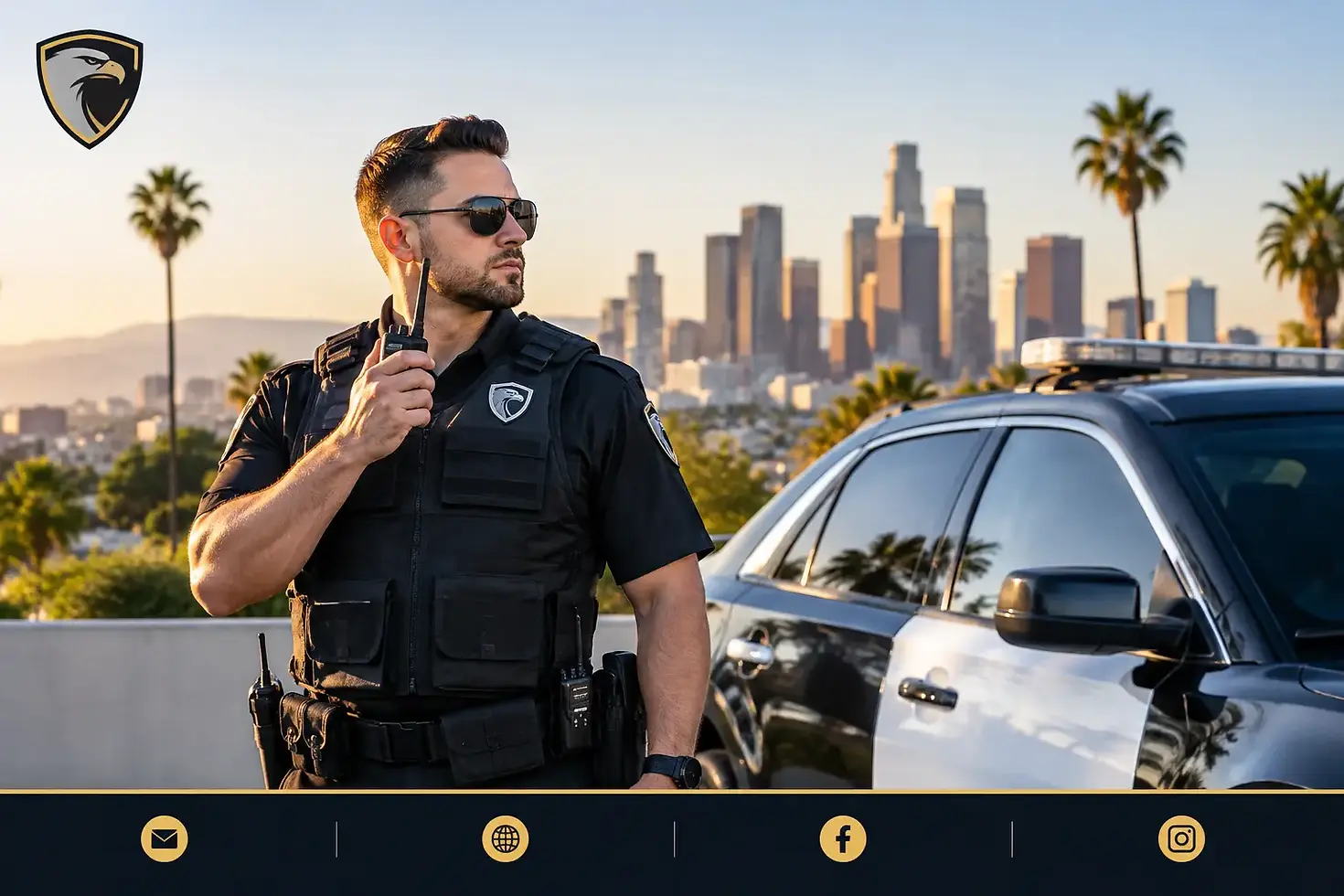
Mobile Patrol Security for Los Angeles Properties
A dark parking structure at 2:00 a.m., an unsecured side gate behind a retail center, or a delivery door left open after closing can create a major exposure in minutes. Mobile patrol gives Los Angeles property owners and managers a visible, accountable security presence during the hours and at the locations where risk tends to rise.
Unlike a stationary guard assignment, patrol officers move between designated sites or checkpoints on a scheduled and randomized basis. Their purpose is direct: deter criminal activity, identify issues early, document what they find, and act quickly when a property needs attention. For many properties, it is the right level of coverage when a full-time on-site guard is not necessary around the clock.
What Mobile Patrol Does at Your Property
A professional mobile patrol program is more than a vehicle driving through a lot. It is an organized security operation built around your property’s vulnerabilities, operating hours, access points, and incident history.
Patrol officers may conduct exterior and interior checks, inspect perimeter fencing, verify that gates and doors are secured, monitor parking areas, address loitering, respond to alarms, and report hazards such as damaged lighting or suspicious vehicles. At multifamily communities, they may also check common areas, deter package theft, and provide a visible presence near entrances. At commercial sites, their work often focuses on loading docks, employee access doors, storage areas, and after-hours activity.
The visible patrol vehicle matters, but disciplined execution matters more. A patrol should follow clear post orders, maintain contact with dispatch, document each completed check, and escalate conditions based on the site’s established response plan. If a gate is breached, a trespasser refuses to leave, or an alarm signals a possible intrusion, the officer needs to know exactly who to contact and when law enforcement or emergency services must be involved.
When Mobile Patrol Is the Right Security Model
Mobile patrol is especially effective for properties that need consistent oversight but do not require one officer to remain in the same place for an entire shift. This includes office buildings after business hours, construction sites, retail centers, warehouses, vacant properties, apartment communities, and distributed portfolios with several nearby locations.
It can also support short-term needs. A property manager may need overnight coverage after vandalism, during a tenant turnover, or while repairing a broken access gate. A business owner may need patrol checks after a theft incident or during a period of increased inventory. Event organizers may use patrol vehicles to oversee satellite parking, vendor load-in areas, and perimeter access before and after the main event.
There are limits. If your site has a busy lobby, frequent visitor screening, a high-volume access point, or an immediate need for constant intervention, a dedicated standing guard is usually the stronger choice. Mobile patrol does not replace a fixed post where continuous observation is required. It works best when strategic, recurring checks and rapid response provide the right balance of protection and cost control.
The Value of Unpredictable Patrol Presence
Predictability can weaken security. If unauthorized visitors know a guard checks the lot at the same time every night, they can simply wait for the patrol vehicle to leave. A well-managed patrol plan combines scheduled duties with varied timing and routes, making it more difficult for someone to identify a gap.
That does not mean random, unaccountable service. Clients should still receive confirmation that patrols occurred and that required checkpoints were completed. The goal is controlled unpredictability: officers follow the client’s priorities while varying their visible presence enough to create a credible deterrent.
This approach is particularly useful in Los Angeles, where a property’s security conditions can differ sharply from one block to the next. A quiet office park may face overnight vehicle break-ins. A mixed-use building may deal with unauthorized entry through a rear alley. A construction site may need focused checks around tools, equipment, and temporary fencing. Local familiarity helps patrol teams recognize the conditions that deserve immediate attention.
Technology Makes Patrols Verifiable
Security decisions should not rely on vague assurances that someone “drove by.” Technology gives property managers a clearer picture of what happened, when it happened, and what action followed.
Digital reporting systems can record patrol times, checkpoint completion, observations, photos, and incident details. GPS-supported fleet oversight can help supervisors verify coverage and dispatch the closest available officer when an alarm or client call comes in. Integrated surveillance monitoring and access control can further strengthen the operation by giving officers better information before they arrive.
For example, a camera alert may show motion near a closed loading dock. Dispatch can direct the patrol officer to that specific location, while the officer can assess the area, secure an unlocked door, and submit a detailed report with photographs. That is more effective than treating mobile patrol as a routine drive-through service disconnected from the rest of the security plan.
The right technology should support judgment, not replace it. Cameras can identify movement, but a trained officer can assess whether it is a resident, contractor, suspicious individual, safety issue, or potential emergency. The strongest model combines active monitoring, reliable communication, and trained personnel who understand how to respond professionally.
What a Strong Patrol Plan Should Include
Before coverage begins, the security provider should conduct a site assessment. This identifies the practical issues that shape the patrol plan: vulnerable entrances, poor lighting, known trespassing areas, blind spots, business hours, tenant activity, emergency contacts, and prior incidents.
From there, the plan should establish patrol frequency, coverage windows, inspection points, officer duties, and escalation procedures. It should also define what happens when an officer finds an unlocked door, occupied vehicle, broken fence, fire hazard, homeless encampment, or active disturbance. Clear instructions prevent hesitation and reduce unnecessary confusion during an incident.
Reporting deserves equal attention. Managers should receive usable information, not a stack of generic notes. A proper report identifies the time, location, condition observed, actions taken, parties notified, and recommended follow-up. Over time, these reports can reveal patterns such as repeated gate failures, recurring trespassing near a particular entrance, or a parking area that needs better lighting.
Choosing a Mobile Patrol Provider
The lowest patrol quote is not always the lowest-risk decision. Coverage quality depends on staffing, supervision, dispatch capability, training, reporting standards, response capacity, and the provider’s familiarity with the service area.
Ask direct questions. How are patrol visits verified? Is dispatch available 24/7? What is the protocol for alarms and active incidents? How quickly can additional officers be deployed if conditions change? Are officers trained to de-escalate situations while protecting the property and respecting lawful boundaries?
Also ask how the company handles communication. Property managers need to know who receives an incident call, how after-hours contacts are updated, and how urgent issues are separated from routine reporting. A patrol service that does not communicate clearly can create more work for your team when it should be reducing operational pressure.
Wings Security Services builds mobile patrol programs around these site-specific requirements, combining trained officers, active dispatch, digital reporting, and technology-supported oversight for properties across Los Angeles.
Make Patrol Coverage Part of the Property Plan
Mobile patrol is most effective when it is treated as one layer of a broader protection strategy. Better lighting, maintained gates, working cameras, controlled access credentials, tenant communication, and a clear incident process all improve patrol effectiveness. When one layer identifies a problem, another can help deter, document, or contain it.
The right coverage level may change over time. A vacant property may need frequent checks while it is unoccupied, then less intensive patrol once tenants move in. A retail center may increase coverage during holiday hours. A residential community may add late-night patrols after a spike in vehicle break-ins. Security should adjust to the real conditions on the ground, not remain fixed because an old contract says so.
A patrol officer’s presence can be brief, but its impact can extend far beyond a single pass through the property. When visits are visible, verified, and backed by a ready response plan, mobile patrol turns after-hours uncertainty into active oversight.


Comments